Activity Description: Hike to help youth find, identify, and learn about animal tracks in nature, discovering how different animals move and interact with their environments.
Items Needed:
- Comfortable walking shoes
- Water bottles
- Animal track identification guide or printouts
- Find out what tracks are likely to be on your hike and print out a track guide for the troop to use, or multiple ones for small groups to use (Trios or Buddy system is great for this hike!).
- (An internet search for your area may have a pre-done track guide, like this one from Maine).
- (Optional) Magnifying glasses
- (Optional) Ruler or measuring tape
- (Optional) Small notebook and pencils for sketching tracks
Before you go:
- Prepare for the hike (5–30 min)
- Find a walking route through a park, wooded trail, or nature area. Look for paths with soft soil, mud, or sand (such as near a creek, pond, or dirt trail) where animal prints are most likely to be visible. Choose a familiar trail that adult volunteers have previously scouted. (A Leader should get familiar with what places are good to look for animal tracks and how to identify them.)
- Print one track guide for the group or multiple copies for small teams.
- Consult and follow your specific youth organization’s official safety policies and activity checkpoints for hiking, ensuring proper adult-to-youth ratios.
Before the Meeting Starts:
- Decide a route. (5–30 min)
- Find a walking route through a wooded area, nature trail, or park with brush, hollow logs, and trees where nocturnal animals might nest, sleep, or leave tracks. Choose a familiar trail that adult volunteers have previously scouted during the daylight hours.
- Strictly enforce the buddy system. Youth must stay close together in the dark and understand why safety rules are elevated at night.
- Consult and follow your specific youth organization’s official safety policies and activity checkpoints for hiking and night activities, ensuring proper adult-to-youth ratios and having approved, background-checked adults present.
Instructions (Estimated Total Time: 35 min):
- Introduce the activity. (5 min)
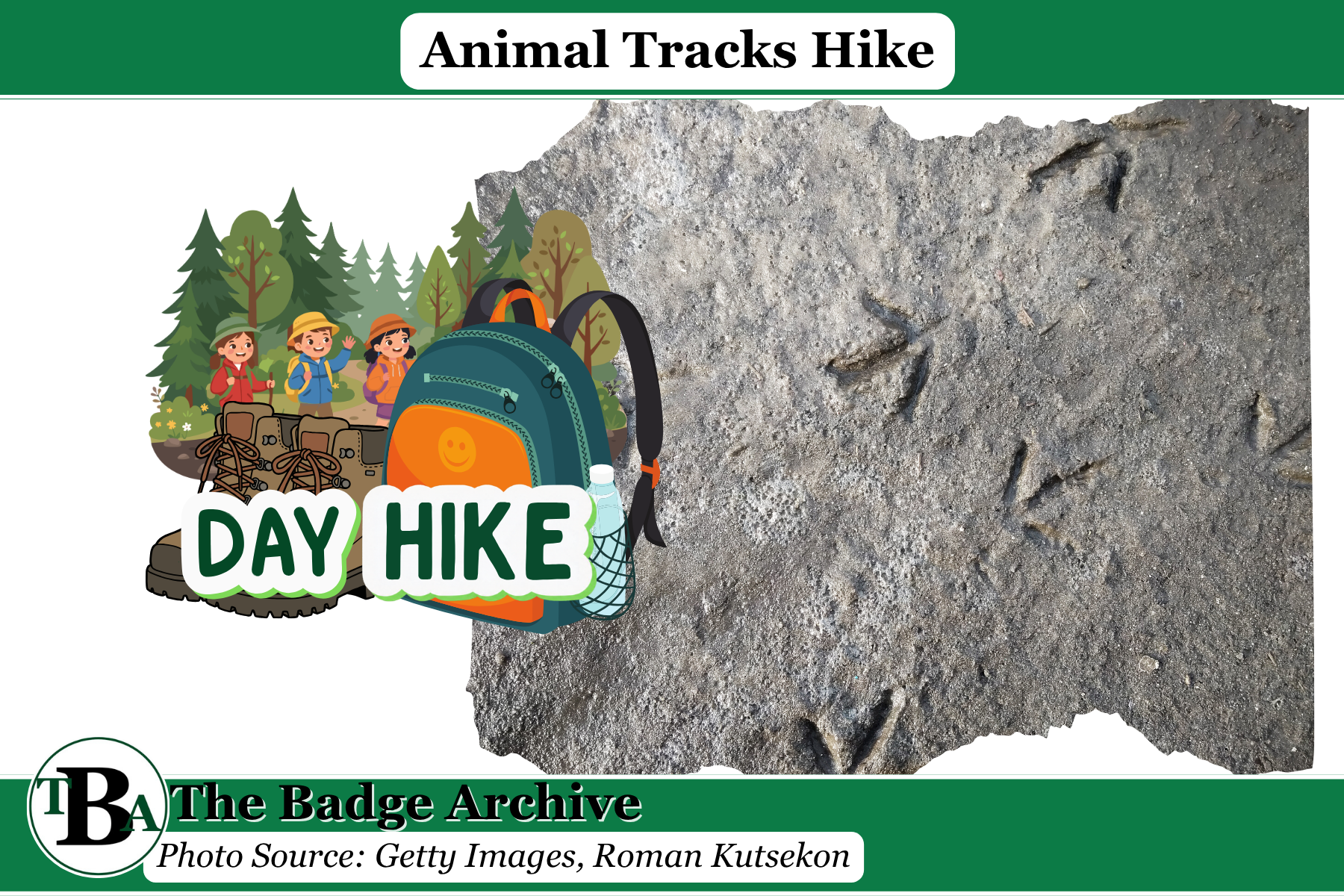
- Discuss what animal tracks are and what they can tell us about an animal (size, how they move, what direction they were going, and whether they were running or walking).
- Ask the group to name local animals that might leave tracks in the area, such as deer, raccoons, squirrels, birds, dogs, or cats.
- Discuss how to spot and identify tracks. (5 min)
- Explain that tracks are easiest to find in soft ground, mud, sand, or snow.
- Explain how animals have unique features that leave distinct prints—like webbed feet for swimming, hooves for running, or padded paws with claws for digging and climbing.
- Go on an animal tracks hike. (20 min)
- Take the group on a walk to actively search for animal tracks along the trail or near water sources. Youth look for clear prints on easy surfaces like mud or sand.
- Direct them to look closely at the ground, especially in damp areas, and point out any impressions they see.
- When a track is found, have the youth examine it closely. Use the identification guide to figure out what animal made it by counting toes, looking for claw marks, or examining the shape of the footpad.
- (Optional) Divide scouts into trios or buddy pairs for exploring.
- (Optional) Use magnifying glasses for a closer look, a ruler to measure the size of the track, or have the youth sketch the tracks in a notebook.
- (Optional) Youth count how many total tracks they found and how many different types of animals or creatures left tracks.
- Review their walk. (5 min)
- Discuss the different tracks they found and the animals they belong to.
- Ask them to share which animal track was their favorite to find and guess what that animal might have been doing when it left the print.
- Remind them that looking for tracks and signs is a great way to observe and learn about wildlife safely without disturbing the animals.
Alternatives
- If hiking isn’t possible, scouts can draw animal tracks and guess each other’s drawings. Or you can use printed track images to identify animals and measure the tracks. See the Animal Track Worksheet activity.
Click Here -> See what GSUSA Requirements are Met
- Fulfills Step 1 of GSUSA Daisy Animal Observer badge requirements.
Info Needed for badge requirements: Animal are all unique. They have different bodies and features that help them live where they are. There is thick fur for colder environments, or fins and gills for underwater creatures. They make unique sounds, and each leave a unique print where they move, called an animal track.
This activity does not meet any Scouting America Requirements.
–
For More Fun Ideas and Plans

Join the Girl Scout Daisy, Brownie, and Junior Leader Help Facebook Group
(Not an official GSUSA Group)

Join the Girl Scout Cadette, Senior, and Ambassador Leader Help Facebook Group
(Not an official GSUSA Group)

See other Recommended Facebook Groups for some Scouting Organizations
(No official Groups)
–
Click Here -> To see information References:
Disclaimer: The information published on The Badge Archive is built from the references listed below. These sources demonstrate that our content is grounded in facts and research, not opinion or speculation. Readers may consult them directly when looking for additional material.
- Evans, Jonah. “Getting Started Identifying Animal Tracks.” NatureTracking, 14 Apr. 2014, https://naturetracking.com/getting-started/. Accessed 5 Oct. 2026.
- Maine Department of Inland Fisheries and Wildlife. “Maine Animal Tracks.” Maine.Gov, https://www.maine.gov/ifw/docs/animaltracksposter.pdf. Accessed 5 Oct. 2026.
- Sprecher, Justin. “Animal Tracks Identification Guide, Animal Footprint ID Charts.” Greenbelly Meals, https://www.greenbelly.co/pages/animal-tracks-identification-guide. Accessed 5 Oct. 2026.
- Find out how you can support The Badge Archive!
- Explore other Day Hike options.