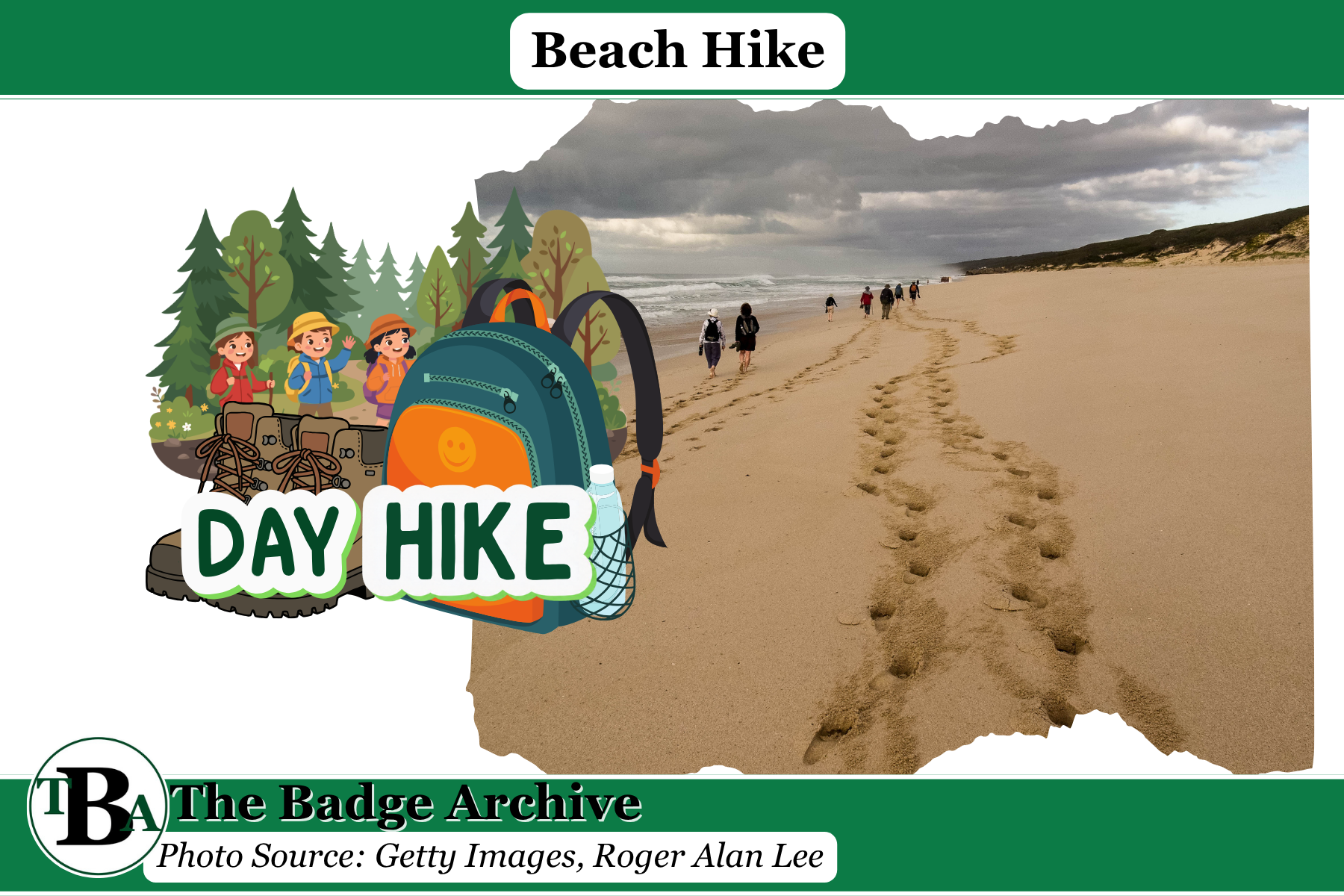
Activity Description: A coastal day hike to help youth explore shoreline ecology, understand the unique physical challenges of walking on sand, and learn how tides affect a beach environment.
Items Needed:
- Sturdy walking or hiking shoes (closed-toe shoes provide support and prevent abrasions from wet sand and shells)
- Sun protection (sunscreen, wide-brimmed hats, sunglasses, and lightweight long sleeves)
- Water bottles (pack more than usual, as beach hiking is strenuous)
- Bug spray (for coastal insects like sand flies or mosquitoes)
- (Optional) Tide chart printout
- (Optional) Coastal field guide for identifying shells, marine life, and bird tracks
Before the Meeting Starts:
- Decide a route. (5–30 min)
- Find a safe, public beach or coastal trail. Visual distances on the sand can be deceiving, so pick a specific turnaround landmark rather than estimating mileage.
- Check the local tide charts to ensure you are hiking during an outgoing or low tide, which provides a safer, wider, and harder walking surface.
- Consult and follow your specific youth organization’s official safety policies and activity checkpoints for coastal activities, ensuring proper adult-to-youth ratios.
- Establish clear physical boundaries to keep youth a safe distance from unpredictable surf, rip currents, or unstable coastal cliffs.
Instructions (Estimated Total Time: 40 min):
- Introduce the activity and coastal safety. (10 min)
- Discuss the unique elements of hiking on a beach.
- Show the group a tide chart and explain how the gravitational pull of the moon creates high and low tides.
- Discuss sun safety: Explain that water and white sand reflect the sun’s UV rays, making sunburns happen much faster at the beach. Ensure everyone has applied sunscreen, put on sunglasses, and is wearing hats.
- Discuss Leave No Trace on the coast. (5 min)
- Explain that beaches are fragile habitats.
- Remind them to leave shells with living creatures inside, stay entirely off fragile sand dunes and dune grass (which prevent erosion and hide bird nests), and pack out all trash, as marine debris is dangerous to ocean wildlife.
- Go on a beach hike. (20 min)
- Take the group on a walk along the shoreline.
- Have them test the terrain: walk in the soft, dry sand higher up on the beach for two minutes (which is extremely fatiguing), and then move down to the wet, hard-packed sand near the water line to feel the difference in physical support.
- Review their walk. (5 min)
- Discuss the different things they observed along the coastline.
- Ask them to share how hiking on sand felt different from walking on a paved road or a dirt trail.
- Remind them that the coast is constantly changing with the wind and tides, making it a dynamic environment that requires preparation, respect, and care.
Beach Hike Items of Interest:
- The Wrack Line: The line of organic debris left high on the beach by the previous high tide. This is the best place to find washed-up kelp, sea sponges, and interesting driftwood.
- Seashells and Sea Glass: Empty bivalve (clam, mussel) and gastropod (snail, whelk) shells, or frosted pieces of sea glass polished by the tumbling sand and waves.
- Egg Cases: “Mermaid’s purses” (the dark, leathery egg cases of skates or certain sharks) and the long, papery spiral egg casings of whelks.
- Coastal Birds: Shorebirds like sandpipers, plovers, and seagulls foraging at the water’s edge, or pelicans and osprey diving for fish just offshore.
- Tide Pool Life: If exploring rocky shorelines at low tide, search the trapped water for sea anemones, sea stars, hermit crabs, barnacles, and small fish.
- Sand Tracks and Trails: Delicate shorebird footprints, the dragging trails of hermit crabs, or the small mounds of excavated sand marking the entrances to ghost crab burrows.
–
For More Fun Ideas and Plans

Join the Girl Scout Daisy, Brownie, and Junior Leader Help Facebook Group
(Not an official GSUSA Group)

Join the Girl Scout Cadette, Senior, and Ambassador Leader Help Facebook Group
(Not an official GSUSA Group)

See other Recommended Facebook Groups for some Scouting Organizations
(No official Groups)
–
Click Here -> To see information References:
Disclaimer: The information published on The Badge Archive is built from the references listed below. These sources demonstrate that our content is grounded in facts and research, not opinion or speculation. Readers may consult them directly when looking for additional material.
- Australian Hiker. “Beach Hiking.” AustralianHiker.com.au, 2018, https://australianhiker.com.au/advice/beach-hiking/. Accessed 5 Oct. 2026.
- U.S. National Park Service. “Take a Hike!.” NPS.gov, 2025, https://www.nps.gov/asis/planyourvisit/hiking.htm. Accessed 5 Oct. 2026.
- Find out how you can support The Badge Archive!
- Explore other Day Hike options.



Leave a Reply