Activity Description: An ultraviolet (UV) night hike to discover the hidden fluorescent world of arachnids, insects, and fungi, helping youth understand the difference between reflection and fluorescence in nature.
Items Needed:
- Comfortable walking shoes
- Ultraviolet (UV) flashlights (around 395nm recommended)
- Standard flashlights (for safe trail navigation)
- Water bottles
- Bug spray
Before the Meeting Starts:
- Decide a route. (5–30 min)
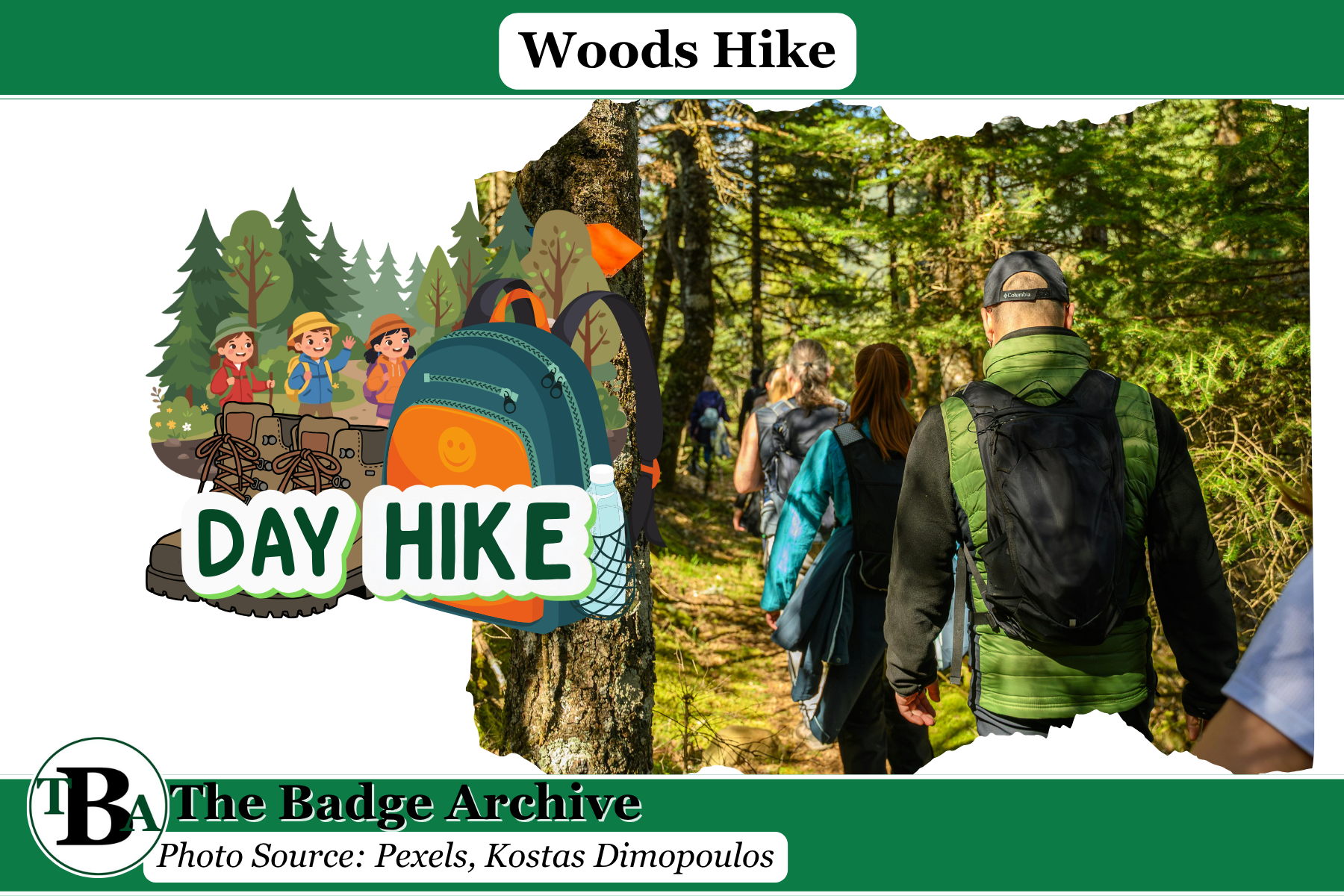
- Find a safe, familiar walking route with varied vegetation, rocks, and fallen logs. Choose a familiar trail that adult volunteers have previously scouted during the daylight hours.
- Strictly enforce the buddy system. Youth must stay close together in the dark and understand why safety rules are elevated at night.
- Consult and follow your specific youth organization’s official safety policies and activity checkpoints for hiking and night activities, ensuring proper adult-to-youth ratios and having approved, background-checked adults present.
Instructions (Estimated Total Time: 35 min):
- Introduce the activity. (10 min)
- Discuss the difference between eye-shine reflection and fluorescence. Explain that UV radiation excites chemicals in certain organisms, causing them to release bright, visible light.
- Establish strict safety rules. Youth must never shine a UV flashlight into anyone’s eyes to prevent retinal damage, and standard flashlights must be used to navigate the physical trail.
- Minimize flashlight use to avoid destroying natural night vision. It takes the human eye at least 20 minutes to fully adjust to the dark. If flashlights are necessary for safety on the trail, cover the lenses with red cellophane or use red LEDs, which do not disrupt night vision.
- Go on the UV hike. (20 min)
- Walk the trail, using standard flashlights for walking and stopping to scan the ground, tree trunks, and rocks with the UV flashlights.
- Direct them to look for brightly glowing lichens and fungi on dead logs and rocks.
- Scan the leaf litter for fluorescent millipedes, insects, and bright white spider egg sacs.
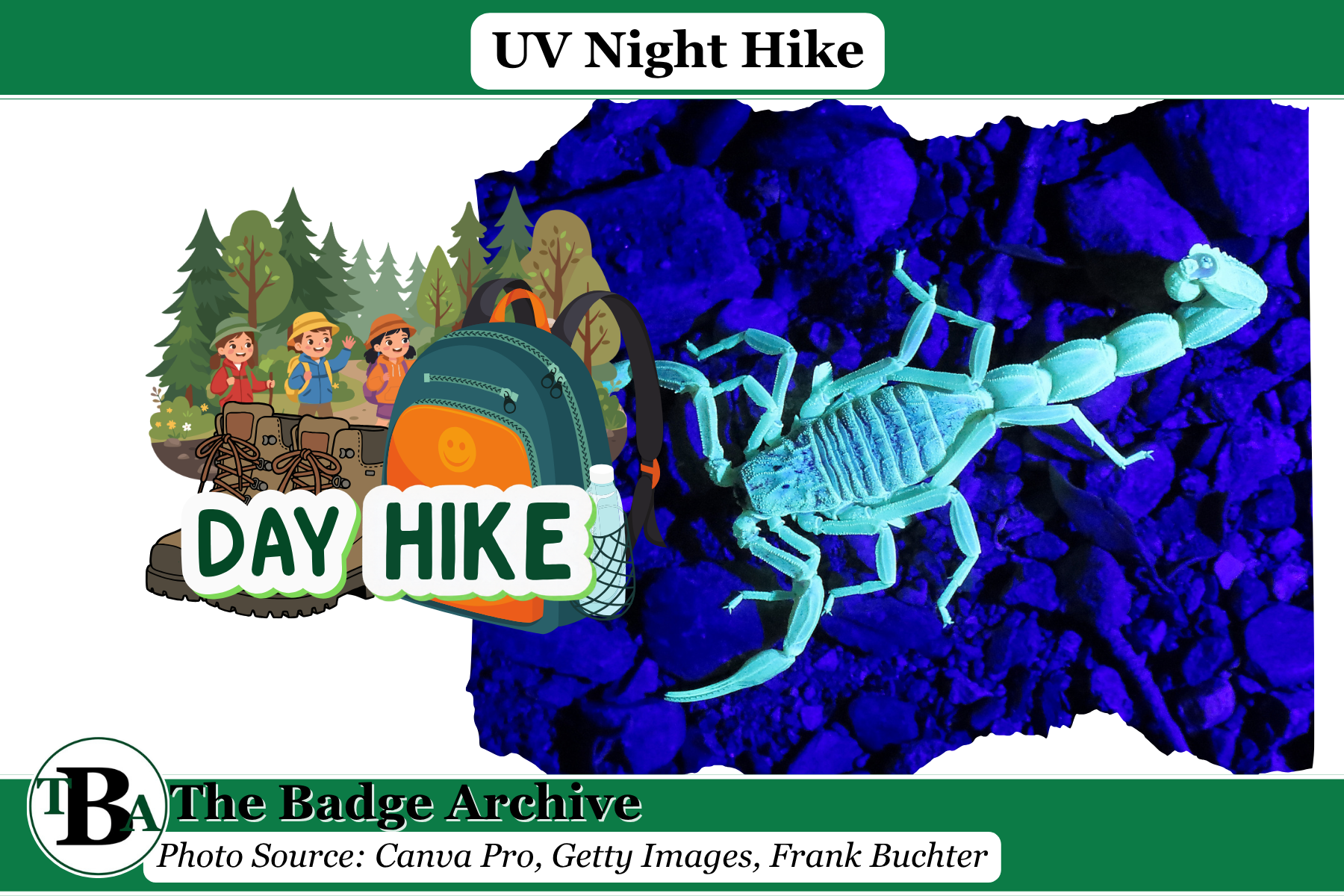
- (If in a Southern or Western state) Look for scorpions, which glow a bright white-green.
- Review their walk. (5 min)
- Discuss the different fluorescent organisms they spotted along the trail.
- Ask them to identify their favorite glowing find from the experience.
- Remind them that while UV light lets us see these hidden features, it is important to observe without disturbing the creatures or their habitats.
Here are common things you can find on a UV hike anywhere in the US:
- Lichens and Fungi: Many lichens growing on tree barks and rocks fluoresce in brilliant, electric oranges, yellows, and greens. Various mushrooms and fungi also glow brightly under UV.
- Millipedes and Centipedes: Many common millipedes and centipedes glow a bright, eerie blue-green under UV light.
- Spider Webs and Eggs: While you might not see the spider itself glow, spider webs and small, hidden egg sacs often fluoresce a bright, solid white.
- Moths and Caterpillars: Several species of moths and caterpillars have fluorescent patterns that will pop under the blacklight.
- Flowers and Plants: Because many pollinating insects (like bees) see in the ultraviolet spectrum, many common flowers have “hidden” UV patterns, spots, and stripes (called nectar guides) that only become visible to us with a UV flashlight.
- Surprise Mammals: Recent discoveries have shown that the fur of some common nocturnal mammals—including the Virginia Opossum and flying squirrels—actually glows bright pink or orange under UV light!
Common UV Things to Find:
- Lichens and Fungi: Many lichens growing on tree barks and rocks fluoresce in brilliant, electric oranges, yellows, and greens. Various mushrooms and fungi also glow brightly under UV.
- Scorpions: Scorpions glow bright white-green due to their cuticle. Scorpions are predominantly found in the South and West (and only about a third of U.S. states have native populations).
- Millipedes and Centipedes: Many common millipedes and centipedes glow a bright, eerie blue-green under UV light.
- Spider Webs and Eggs: While you might not see the spider itself glow, spider webs and small, hidden egg sacs often fluoresce a bright, solid white.
- Moths and Caterpillars: Several species of moths and caterpillars have fluorescent patterns that will pop under the blacklight.
- Flowers and Plants: Because many pollinating insects (like bees) see in the ultraviolet spectrum, many common flowers have “hidden” UV patterns, spots, and stripes (called nectar guides) that only become visible to us with a UV flashlight.
- Surprise Mammals: Recent discoveries have shown that the fur of some common nocturnal mammals (including the Virginia Opossum and flying squirrels) actually glows bright pink or orange under UV light!
–
For More Fun Ideas and Plans

Join the Girl Scout Daisy, Brownie, and Junior Leader Help Facebook Group
(Not an official GSUSA Group)

Join the Girl Scout Cadette, Senior, and Ambassador Leader Help Facebook Group
(Not an official GSUSA Group)

See other Recommended Facebook Groups for some Scouting Organizations
(No official Groups)
–
Click Here -> To see information References:
Disclaimer: The information published on The Badge Archive is built from the references listed below. These sources demonstrate that our content is grounded in facts and research, not opinion or speculation. Readers may consult them directly when looking for additional material.
- Girl Scouts of Central Texas. “Night Hikes.” GSCTX.org. 2023, https://www.gsctx.org/content/dam/gsctx-redesign/documents/members/for-volunteers/troop-planning-resources/Night-Hike-Tip-Sheet.pdf. Accessed 5 Oct. 2026.
- “How to Take Kids on Night Hikes.” PBS SoCal, 30 June 2021, https://www.pbssocal.org/education/families/how-to-take-kids-on-night-hikes. Accessed 5 Oct. 2026.
- Stolper, Steve. “Ultraviolet Hike.” NatureOutside, 14 Dec. 2019, https://www.natureoutside.com/ultraviolet-hike/. Accessed 5 Oct. 2026.
- Find out how you can support The Badge Archive!
- Explore other Day Hike options.




Leave a Reply