So you’ve volunteered! Or perhaps you were voluntold?
Some leaders are recruited by family or friends. Others step in because no one else is available. And some have long dreamed of leading a troop. However you arrived, you’re here now, and that’s what matters. This guide will help you take your first steps with clarity and confidence.
GSUSA and Your Local Council
Girl Scouts of the USA (GSUSA) is the national organization, but each region is managed by a local Girl Scout Council. Councils interpret national guidelines in slightly different ways, so your experience may vary depending on your location. Your local council is your primary resource for:
- Local policies and procedures
- Training requirements
- Safety regulations
- Badge and patch programs
- Events and support staff
Always refer to your council’s materials and staff for the most accurate and relevant information.
The Badge Basics
Badges are a central part of the Girl Scout experience, but not all badges are the same.
- GSUSA badges are official and available nationwide. These are earned through structured activities that align with national standards.
- Fun patches are typically worn on the back of the uniform and may be tied to events, themes, or council-specific programs. These are less formal but still meaningful.
- Council’s Own badges are unique to a few individual councils. They are the same size and shape as official GSUSA badges but were created locally. While GSUSA no longer supports the creation of new Council’s Own badges, some councils continue to offer existing ones. The majority of councils do patch programs: fun patches with requirements to earn them.
Troops are allowed to earn any of these, or none if they aren’t interested in badges and patches.
Know Your Checkpoints
Safety is a top priority. GSUSA provides Safety Activity Checkpoints that outline best practices and rules for a wide range of activities: from hiking and cooking to digital engagement. Each council has its own version of these checkpoints. Local geography, past incidents, and insurance requirements can all influence council-specific rules.
- Always follow your local council’s version of the Safety Activity Checkpoints.
- Troops may participate in any activity (even if there is no badge for it) as long as it complies with safety guidelines.
Understanding and applying these rules is essential to creating a safe and empowering environment for your troop.
Training: What to Expect
Before leading your troop, you’ll need to complete a few key steps:
- Register with GSUSA and complete your background check.
- Contact your council to learn about required training.
Training may include:
- General volunteer or leader orientation
- Youth protection training to help recognize and respond to potential abuse
- Council-specific modules tailored to your region’s needs
Get a list of required and recommended trainings. This will help you know what you must do and what is available if you want more resources.
F.A.Q.
When you first start as a GSUSA Leader it can be overwhelming. There really isn’t a universal guide to help new leaders. We’ve tried to add a list of Frequently Asked Questions to help new leaders.
Remember everything you read online that is general for all of USA should always be double checked with your local council rules and regulations.
Click Here —> How do I lead a group? I’ve never done this before!
For help on how to do this? – This document from GSEOK is specific to Daisies, but an excellent basics of leading a Girl Scout troop for any new Girl Scout Leader. A Summary of tips and tricks from the 1984 Daisy Girl Scout Leaders’ Guide is also available.
For a checklist of what you need to physically start a troop? Try our list.
Click Here —> What do I need to do for my first meeting?
The first meeting for a new troop is not a troop meeting. It’s a parent meeting. Here is a quick checklist to go over when you are a brand new leader to make sure that you are ready for the first meeting with parents before you even start planning troop meetings.
When you are ready for troop meetings, check out the Single Level Meeting Flow page for details on how a typical troop meeting goes.
Click Here —> Where are we supposed to meet?
There are multiple options, and you need to check with your council on what they allow (some allow you to meet in your home and some do not). For a list of possible places see Where can you meet.
Click Here —> How do I handle Troop Dues?
You do not have to charge Troop Dues, although many troops find it helpful to fund normal troop meetings (supplies and badges). Some troops are fully funded through fundraising.
If you charge Troop Dues, you CANNOT require any family to pay them – regardless on if they have the money to pay it. As a non-profit organization it cannot be required and families that refuse to pay cannot be discriminated or penalized for it. Simply readjust the budget so that those that did pay will cover the cost of all scouts, regardless of if their families paid.
More information on Troop Dues and what some troops charge is here: Troop Dues
Click Here —> What are Bridging, Investiture and Re-Dedication Ceremonies?
These are simply a traditional way to officially start being a Girl Scout (Investiture), start a new Girl Scout year for continuing scouts (Re-Dedication), or start a new level for continuing scouts (Bridging). They are not required, but are recommended in order to keep tradition and Girl Scout sisterhood active. Most troops will do Bridging as scouts enjoy earning the rainbow bridging badge. Information on the ceremonies can be found here: Bridging and Investiture/Re-Dedication
Click Here —> What is a Journey? Is it like a Badge?
Journeys have requirements like a badge does, but also requires a Take Action Project (TAP). They are officially retiring in October of 2026, but GSUSA always allows retired badges to be earned. Retiring just means GSUSA stops making the badges. Learn more about Journeys here.
Click Here —> How do I plan a Troop Meeting?
Troops are all different. It depends on what level your scouts are, what space you have to meet in, how many adult volunteers you allow or have available to stay. Click here for general advice on how to Plan a Troop Meeting.
–
For More Fun Ideas and Plans
for Daisy, Brownie, and Junior Scouts
Join the Girl Scout Daisy, Brownie, and Junior Leader Help Facebook Group
(Not an official GSUSA Group)

This is a supportive Facebook community for Daisy, Brownie, and Junior Girl Scout leaders. Whether you’re seeking advice, fresh ideas, or meeting plans, you’re in the right place! Let’s inspire each other, share our experiences, and make every troop meeting a memorable adventure.
for Cadette, Senior, and Ambassador Scouts
Join the Girl Scout Cadette, Senior, and Ambassador Leader Help Facebook Group
(Not an official GSUSA Group)
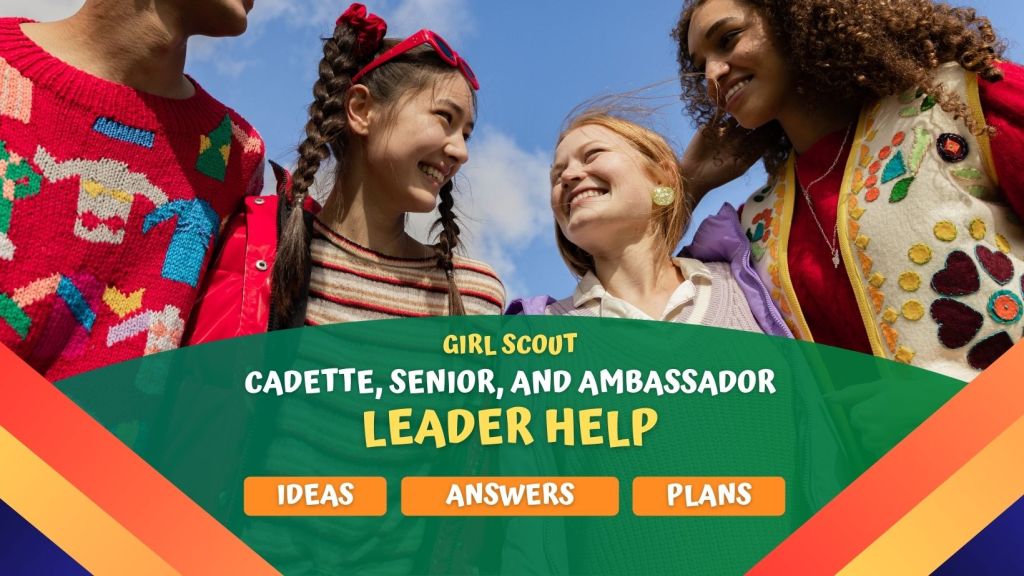
This is a supportive community for Cadette, Senior, and Ambassador Girl Scout leaders. This group offers solutions to keep older scouts engaged in scouting amidst their busy lives. Share strategies, tackle challenges, and exchange ideas for fun, meaningful activities that resonate with teens and build lasting connections.
Find out how you can support The Badge Archive!
–
- Return to the Daisy Badge List.
- Return to the Brownie Badge List.
- Return to the Junior Badge List.
- Return to the Cadette Badge List.
- Return to the Senior Badge List.
- Return to the Ambassador Badge List.
–



 The Badge Archive