Here is a full detailed example of what a Take Action Award or Global Action Award linked to the issue of Autism Awareness would be like. Feel free to skip to the step you are most interested in:
- Step One (Identify)
- Step Two (Research)
- Step Three (Brainstorm)
- Step Four (Plan)
- Step Five (Reflect)
Note – These plans are aimed a Take Action or Global Action, but will also work for the True North Award, which requires similar requirements as Step One (Identify), Step Three (Brainstorm), Step Four (Plan), and Step Five (Reflect).
Autism Spectrum Disorder (ASD) affects millions of individuals worldwide, influencing how they experience the world and interact with others. Despite growing awareness, misconceptions about autism persist, making it vital to educate communities and foster acceptance.
Understanding autism and advocating for inclusivity can create a more supportive environment where neurodivergent individuals feel valued and understood.
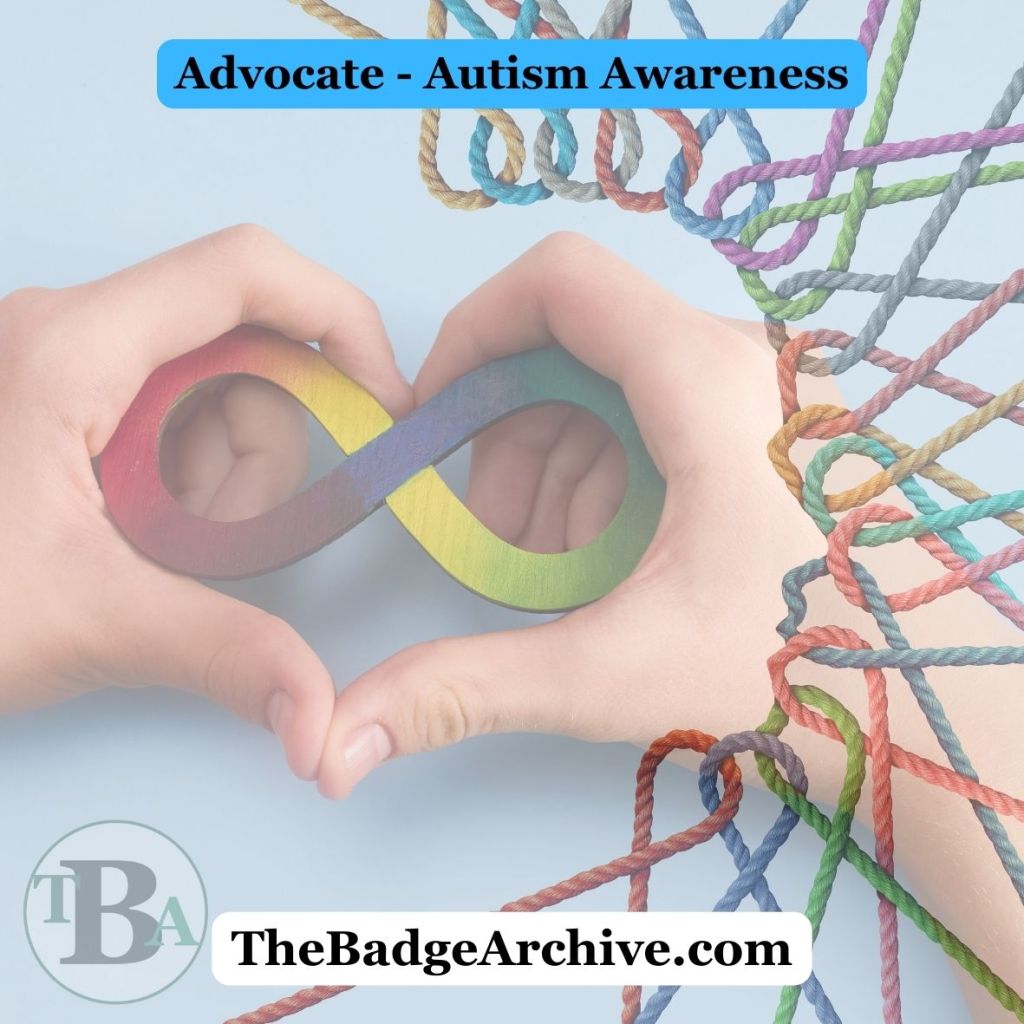
Step One: Identify a community issue
Explore a badge you’ve earned and use it to identify a local community issue that your group is curious about and ready to address by creating meaningful, lasting change.
(True North Equivalent: Step one: Reflect on the values that matter most to you and discover how they guide your choices, relationships, and everyday actions, especially when things get tough.)
What Badge Might Connect?
Click to Expand → To see a list of possible badges:
- Inside Government – Understand how local policy affects accessibility or educational supports for autistic individuals.
- Digital Leadership – Learn how to use social platforms to spread awareness and correct misinformation.
- Public Speaker – Practice sharing stories that foster empathy and challenge stereotypes.
- Healthy Relationships (Council Patch Program) – Explore how different communication styles can lead to deeper, more respectful connections.
- Think Like an Engineer – Consider how sensory-friendly environments or tools can be designed to meet diverse needs.
How Scouts Might Link Their Badge to Autism Awareness
- Reflect: What did you learn during your badge experience? Did anything spark curiosity about how different people live or communicate?
- Observe: Is there a lack of awareness or understanding about autism in your school, troop, or local spaces?
- Connect: How could your badge skills help address this? Could you use what you learned to foster dialogue, design solutions, or lead change?
How Autism Awareness Connects to Local Community Issues
(Take Action Award)
Autism is often misunderstood or under-supported in everyday places like schools, parks, stores, and libraries. By looking closely at your own community, you can spot ways to make these spaces more inclusive and use your badge skills to help.
Click to Expand → To see a chart of local connections
| Local Setting | Connection to Autism Awareness |
|---|---|
| Schools or Troop Meetings | Are students with sensory sensitivities struggling to participate fully? Are teachers prepared to support them? |
| Libraries | Do quiet zones work well for everyone? Are neurodiverse books or resources available? |
| Public Events or Assemblies | Are there accommodations for noise, crowds, or social overwhelm? Are there places to take breaks? |
| Parks and Playgrounds | Are there visual cues or sensory-friendly features? Are friendship and inclusion promoted among peers? |
| Local Decision-Making | Do policies support training, awareness, and accessibility for neurodiverse individuals in community services? |
Scouts can ask questions like:
- “Is there enough understanding of sensory needs in my school or troop?”
- “Are autistic voices included in planning events or designing spaces?”
- “Do community helpers (like librarians, teachers, volunteers) have tools to support neurodiverse kids?”
How Autism Awareness Connects to the UN Global Goals
(Global Action Award)
Autism advocacy isn’t just a local issue, it’s part of a worldwide movement to build inclusive, equitable communities. The United Nations recognizes that supporting neurodiversity helps achieve many of the 17 Sustainable Development Goals (SDGs), especially those focused on health, education, equality, and community design.
Click to Expand → To see a chart of global goal connections
| Global Goal | Title | Connection to Autism Awareness |
|---|---|---|
| Goal 3 | Good Health and Well-Being | Promotes access to inclusive healthcare and mental health support for autistic individuals. |
| Goal 4 | Quality Education | Encourages schools to adopt inclusive teaching methods and sensory-friendly environments. |
| Goal 8 | Decent Work and Economic Growth | Supports workplace inclusion and equal employment opportunities for neurodiverse individuals. |
| Goal 10 | Reduced Inequalities | Challenges discrimination and promotes policies that protect the rights of people with disabilities. |
| Goal 11 | Sustainable Cities and Communities | Advocates for autism-friendly public spaces, transportation, and urban design. |
| Goal 16 | Peace, Justice and Strong Institutions | Promotes inclusive laws and systems that recognize and support neurodiverse voices. |
How Autism Awareness Connects to a Personal Goal
(True North Award)
Every meaningful project starts with a personal value, something you care deeply about. Whether it’s fairness, kindness, courage, or empathy, choosing to address autism awareness gives scouts a chance to practice those values in real life. This kind of work isn’t just about helping others. It also helps you grow.
Click to Expand → To see a chart of personal value connections:
| Personal Value | Connection to Autism Awareness |
|---|---|
| Empathy | Learning how autistic people experience the world helps you better understand different perspectives. |
| Courage | Speaking up against stereotypes, leading a workshop, or designing an inclusive project takes boldness. |
| Respect | Creating sensory-friendly spaces shows that you honor everyone’s needs, even when they’re invisible. |
| Kindness | Helping classmates feel safe, included, and understood—especially when they’re often left out. |
| Fairness | Challenging unequal systems and encouraging inclusion is a way to make things more just for everyone. |
Scouts might reflect:
- “I chose autism awareness because I care about fairness, and I noticed someone being treated unfairly.”
- “Making this poster helped me speak up for others—even though I’m usually shy.”
- “I learned how brave it feels to teach something I believe in, even if just one person listens.”
This connection helps scouts build internal purpose—not just complete an activity. It also makes the project a powerful candidate for True North, since it’s rooted in personal growth and values-based action.
Step Two: Explore the issue’s root causes
Write down what your group knows, adding insights from your badge work, researching the topic and connecting with affected people or organizations, then organizing and analyzing your findings to uncover barriers, patterns, and root causes to explore why your chosen issue exists.
(True North Equivalent: Does not require a specific research step.)
Click to Expand → To see answers to the questions GSUSA asks for Step Two:
| Section | Scout Notes (Sample for Autism Awareness) |
|---|---|
| Community Issue | Lack of autism awareness and inclusion in local schools |
| What We Know | – Our badge work taught us about different communication styles – Some students feel overwhelmed during assemblies or crowded events |
| What We Still Need to Learn | – Are there any schools nearby using sensory-friendly practices? – What kinds of training do teachers receive on neurodiversity? – What are current policies on accommodations? |
| How We’ll Research | – Read articles from Autistic Self Advocacy Network – Interview a school counselor or special education teacher – Watch videos made by autistic self-advocates |
| Root Causes | – Limited educator training in inclusive practices – Harmful stereotypes and lack of accurate information – Few opportunities for direct input from autistic individuals |
| Dig Deeper (“Why?” again) | – Teacher training programs may not include neurodiversity education – Autism is often misunderstood in media and curriculum – Schools may not be aware of low-cost inclusion strategies |
| Community Impact | – Autistic students feel excluded or stressed – Families struggle to advocate for needed accommodations – Peers miss out on valuable friendships and perspectives |
| Resources & Support | – Local autism support groups – Online communities like The National Autism Association – School staff willing to listen and collaborate |
| Who’s Affected Most? | – Autistic students and their families – Teachers trying to support diverse needs – The wider school community missing out on inclusive practices |
Scout Research Log: Autism Awareness
Click to Expand → To see chart of resources used to get the answers:
| Source Title | Type | What We Learned | Link |
|---|---|---|---|
| Autistic Self Advocacy Network (ASAN) | Advocacy Organization | Firsthand perspectives from autistic individuals; importance of self-advocacy and inclusion | ASAN Website |
| Autism Awareness Australia | Informational Website | Common misconceptions and causes of autism; how awareness impacts inclusion | Autism Awareness Australia |
| CDC: Autism Spectrum Disorder | Government Resource | Statistics, signs, and support strategies for autistic individuals | CDC Autism Info |
| Psychology Today | Article | Clarified that increased autism diagnoses are due to better awareness and broader definitions | Psychology Today |
| Columbia Magazine | Research Summary | Prenatal factors and environmental influences that may contribute to autism | Columbia Magazine |
| Dr. Magdolna Saringer | Medical Article | Explored genetic and environmental triggers; emphasized spectrum diversity | Dr. Saringer’s Article |
| Scouting Magazine: “6 Resources for Working with Scouts with Autism” | Scouting Resource | Tips for leaders supporting autistic scouts; importance of structure and patience | Scouting Magazine |
| BSA: Disabilities Awareness Resources | Scouting Resource | Guidance for inclusive troop practices and understanding special needs | BSA Disabilities Awareness |
| Girl Scouts LA: Ability Awareness Guide | Scouting Resource | Support strategies for girls with intellectual disabilities, including ASD | GSLA Ability Awareness |
Step Three: Brainstorm project ideas/solutions
Begin by exploring existing efforts, then use your group’s talents, interests, and research to brainstorm and choose a sustainable project idea that creates lasting impact.
(True North Equivalent: Step two: Choose a goal or moment that feels meaningful and challenging, reflects your values, and gives you a chance to practice courage, whether it’s a bold step or a quiet decision that helps you grow.)
Awareness & Education
- Create a Sensory-Friendly Poster Series
Design posters for schools or libraries that explain sensory sensitivities and offer tips for creating inclusive spaces. - Host an Autism Acceptance Workshop
Lead a peer-to-peer session using games, roleplay, or videos to teach about neurodiversity and respectful communication. - Make a Myth-Busting Video or Slideshow
Use research to correct common misconceptions and share real stories from autistic individuals. - Build a Classroom Resource Kit
Assemble fidget tools, visual schedules, and sensory supports for teachers to use with neurodiverse students.
Advocacy & Action
- Propose a “Quiet Zone” at School Events
Work with school leaders to create calm spaces during assemblies, dances, or pep rallies. - Launch a Social Media Campaign
Share facts, quotes, and artwork that promote autism acceptance. Use hashtags like #DifferentNotLess or #AutismAcceptance. - Create an Autism-Friendly Charter
Draft a list of inclusive practices for your school or troop and present it to decision-makers. - Organize a Community Panel or Q&A
Invite autistic self-advocates, educators, or therapists to speak and answer questions.
Hands-On & Creative
- Design a Sensory Path or Garden
Create a calming outdoor space with textures, colors, and movement-friendly features. - Make an Inclusive Storybook or Comic Strip
Write and illustrate a story that features an autistic character in a positive, empowering role. - Build a Sensory-Friendly Event Kit
Include noise-canceling headphones, visual schedules, and comfort items for use at troop or school events. - Create a Neurodiversity Mosaic
Collaborate with others to decorate tiles, stars, or other shapes that represent identity, strengths, and inclusion. Combine them into a public art display that celebrates how different people come together to create something beautiful.
Communication & Leadership
- Start a Peer Buddy Program
Pair students to promote friendship, understanding, and support across neurotypes. - Train Troop Leaders on Inclusion Tips
Use your badge knowledge to teach leaders how to support autistic scouts with structure and flexibility. - Write a Letter to School Leadership
Advocate for autism education programs or sensory accommodations in classrooms.
Step Four: Make a plan
Turn your project idea into a measurable plan by setting a clear goal, organizing tasks and roles around your group’s strengths, identifying needed supplies and resources, and sharing the plan with trusted adults and community partners for feedback and support.
(True North Equivalent: Step three: Build a plan to achieve your courageous goal by breaking it into manageable steps, seeking support from others, and preparing strategies that help you feel confident, calm, and ready to take action.)
Click any project from the Step Three Brainstorm list to view full sample plans. Seriously, these aren’t just outlines. They’re full-scale, ready-to-use guides to help you get started. Pick one that excites you and jump in!
Step Five: Take Action and celebrate!
Launch your project by following your plan, tracking progress, adjusting as needed, and evaluating its success together. Then celebrate what you’ve accomplished. (Sharing your story to inspire continued change is optional.)
(True North Equivalent: Step four: Take meaningful action guided by courage and confidence, then reflect on how the experience strengthened your character and leadership, and how you’ll keep growing from it.)
Click to Expand → To see answers to the questions GSUSA asks for Step Five:
What I Did
Describe how you launched your project. Did anything go differently than expected? What adjustments did you make along the way?
Example prompts:
- “I presented my myth-busting video in class and even added a new story based on feedback.”
- “Only five students came to my sensory workshop, but they said they loved it and want to help next time.”
What Changed
What did people learn, notice, or say about your project? How did your actions make a difference—big or small?
Example prompts:
- “One teacher said my poster made her realize some students needed visual instructions too.”
- “After using the sensory kit, my class started giving quiet breaks before tests.”
What I’m Proud Of
Celebrate a moment that mattered to you. It could be something brave you did, a skill you used, or the way someone responded.
Example prompts:
- “I was nervous to lead the workshop but felt really proud when someone said it helped them understand their brother better.”
What Comes Next
Share how you plan to keep the momentum going—even in small ways. You can update, repeat, or hand off the project to someone else.
Example prompts:
- “I’ll check on the classroom kit next month and offer new tools if they need them.”
- “My troop leader said I can run my poster activity for younger scouts next year.”
Optional Sharing
If you want to inspire others, you can share your story through:
- A reflection poster or journal entry
- A photo recap or video explanation
- A troop meeting or school newsletter
–
For More Fun Ideas and Plans
for Daisy, Brownie, and Junior Scouts
Join the Girl Scout Daisy, Brownie, and Junior Leader Help Facebook Group
(Not an official GSUSA Group)

This is a supportive Facebook community for Daisy, Brownie, and Junior Girl Scout leaders. Whether you’re seeking advice, fresh ideas, or meeting plans, you’re in the right place! Let’s inspire each other, share our experiences, and make every troop meeting a memorable adventure.
for Cadette, Senior, and Ambassador Scouts
Join the Girl Scout Cadette, Senior, and Ambassador Leader Help Facebook Group
(Not an official GSUSA Group)
This is a supportive community for Cadette, Senior, and Ambassador Girl Scout leaders. This group offers solutions to keep older scouts engaged in scouting amidst their busy lives. Share strategies, tackle challenges, and exchange ideas for fun, meaningful activities that resonate with teens and build lasting connections.
Find out how you can support The Badge Archive!
–
- Return to the Daisy Badge List.
- Return to the Brownie Badge List.
- Return to the Junior Badge List.
- Return to the Cadette Badge List.
- Return to the Senior Badge List.
- Return to the Ambassador Badge List.
–


 The Badge Archive