The word “Retired” can be confusing. In almost every other uniformed organization (from the military to other scouting groups) when an award is retired, it usually means it has been “de-commissioned.” In those organizations, once a badge is retired, it is no longer authorized for wear and must be removed from the uniform.
But in the Girl Scouts of the USA (GSUSA), “Retired” works differently.
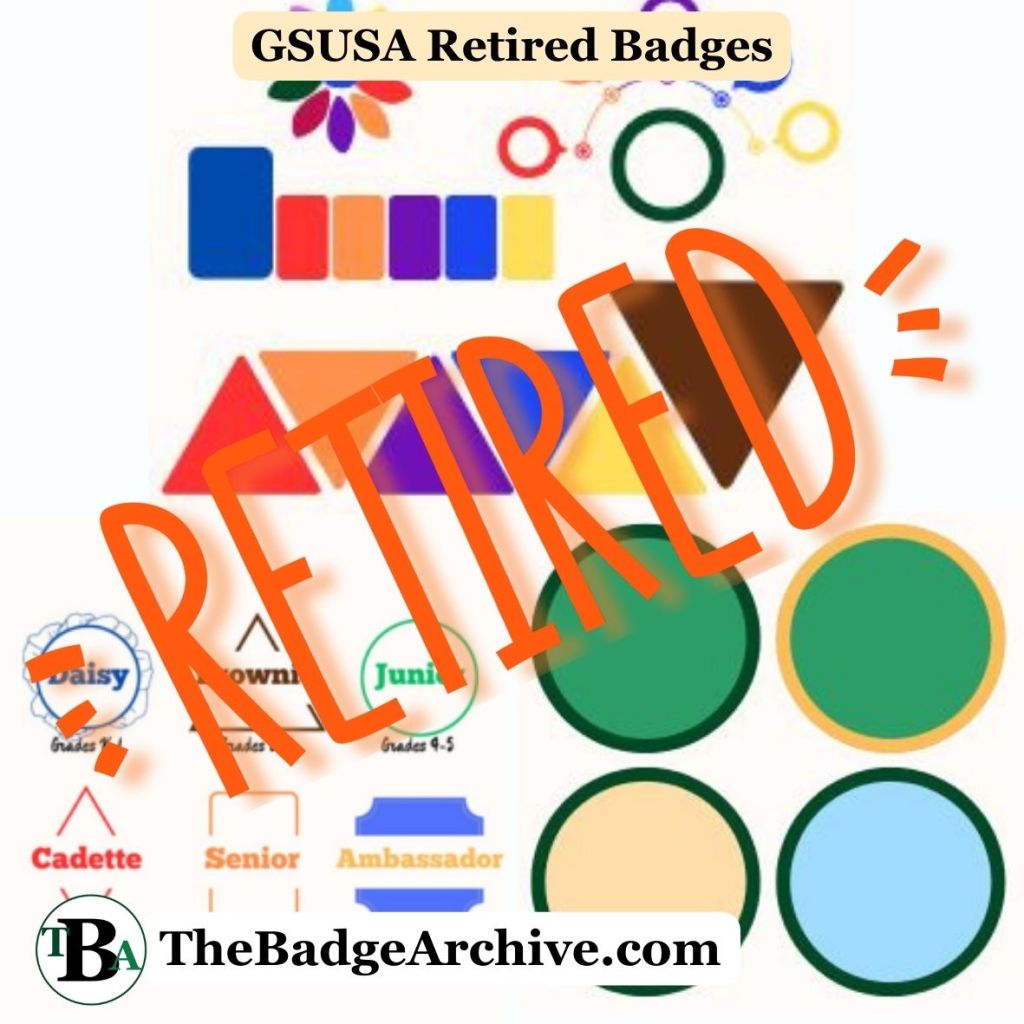
It is a common misconception that once a badge leaves the catalog, it is “dead” or invalid. Leaders often worry that if a girl earns a retired badge, it has to be relegated to the back of the vest with the “fun patches.” This is not true. In the GSUSA dictionary, “Retired” simply means GSUSA will not be making more badges of that type.
The “Once a Badge, Always a Badge” Rule
Unlike other organizations, GSUSA operates under a policy often summarized by archivists and long-time leaders as “Once a badge, always a badge.”
Simply put: If a badge was ever official by GSUSA or a Council, it remains official forever. However, it is vital to distinguish between a Badge and a Patch, even when both have requirements.
Many local councils create their own “Patch Programs.” Just like national badges, these official programs have specific requirements a scout must complete to earn them. However, the physical awards usually do not follow the distinct shape, size, or color-coding of the Official Badges. The Patch Programs are sometimes called “Council’s Own”, but most use that term only for the older “Council’s Own” program that allowed councils to get new Official Badges approved by GSUSA to be earned and worn on the front of the uniform. That program was retired and only a few councils have true “Council’s Own” still in circulation.
In the end, Official Badges go on the front, while Council Patch Programs (even those with official requirements) go on the back with the Fun Patches.
The “Once a badge, always a badge” rule is the golden key for the front of the uniform: if it was ever an Official Badge, it retains its place of honor on the front forever, regardless of whether GSUSA is still printing it.
This philosophy is supported by GSUSA’s own approach to program updates. When national leadership retires major program materials (such as specific Journeys), they have explicitly stated that finished awards “remain valid” and count toward prerequisites for high awards. The “retirement” is purely administrative. It means the materials are leaving the shop, not that the achievement is leaving the scout’s record.
The Real Challenge: Availability
If retired badges are still official, why do we call them retired? It comes down to supply. When GSUSA lists a badge as retired, they are effectively saying: “We are no longer manufacturing this.”
This creates a unique challenge for a Girl Scout interested in a retired badge. You are allowed to earn the badge, and you are allowed to wear the badge, but you cannot simply walk into a council store and buy it. To wear a retired badge, you must become a historian and a hunter. You have to source the physical patch from secondary markets. See our guide on how to Find Retired Badges for possible ways to do this.
–
For More Fun Ideas and Plans

Join the Girl Scout Daisy, Brownie, and Junior Leader Help Facebook Group
(Not an official GSUSA Group)

Join the Girl Scout Cadette, Senior, and Ambassador Leader Help Facebook Group
(Not an official GSUSA Group)

See other Recommended Facebook Groups for some Scouting Organizations
(No official Groups)
–
Click Here -> To see information References:
Disclaimer: The information published on The Badge Archive is built from the references listed below. These sources demonstrate that our content is grounded in facts and research, not opinion or speculation. Readers may consult them directly when looking for additional material.
- Girl Scouts of the U.S.A. “The New Girl Scout Leadership Awards Explained.” Girl Scout Blog, 2026, blog.girlscouts.org/2026/01/the-new-girl-scout-leadership-awards.html. Accessed 25 Jan. 2026.
- “Retired Badges.” Channel Islands Service Unit of Girl Scouts California’s Central Coast, 2026, channelislandsgirlscouts.weebly.com/retired-badges.html. Accessed 25 Jan. 2026.
- “Vests vs. Sashes, Badges vs. Patches, and General Patch/Pin/Uniform Tips.” Troop Leader Mom, 2016, troopleadermom.blogspot.com/2014/07/brownies-daisies-and-beyond-vests-vs.html. Accessed 25 Jan. 2026.
–
- Find out how you can support The Badge Archive!



 The Badge Archive