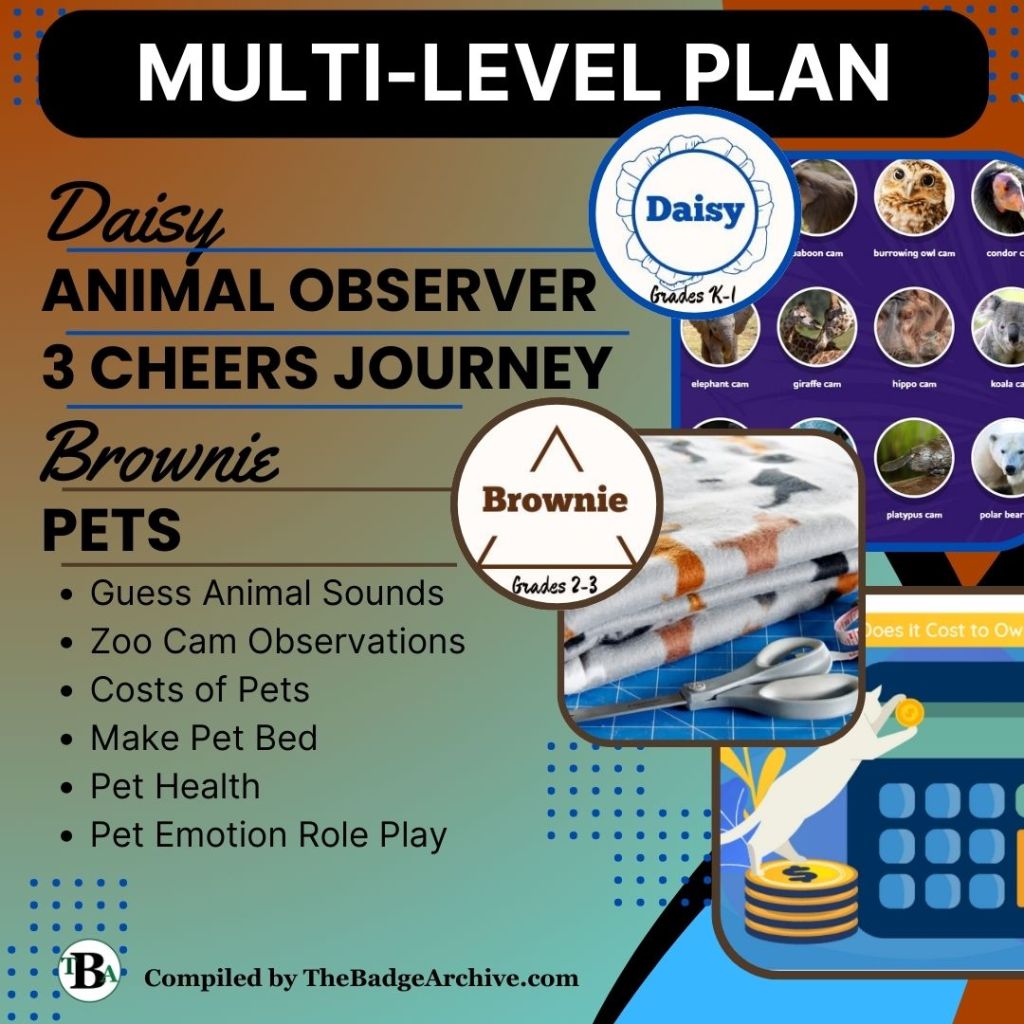
Basic Meeting Plans are designed to have minimal supplies and still hit the GSUSA Requirements. Most meetings can be done in a 90 minute time frame.
Earns Daisy Animal Observer, Daisy 3 Cheers Red Robin Award (Learn how to take care of animals by yourself), AND Brownie Pets. (Note: Daisy troops still need to do more to earn the other 2 parts of the 3 Cheers Journey).
Items needed:
- Devices that small groups can watch a San Diego Zoo Live Cam to observe three facts.
- A device that can look up Top 10 Pet Costs from 2022 for comparison.
- Materials needed for the troop’s chosen Blanket/Bed to donate
Animal Sounds
Info Needed: Animal are all unique. They have different bodies and features that help them live where they are – thick fur for colder environments, or fins and gills for underwater creatures. They also make unique sounds.
Activity Needed: Play the Animal Sound Guessing Game video and have scouts guess which sounds are what animals.
(D Requirement 1 Earned)
Animal Observations
Info Needed: We cannot speak the same language, but we learn a lot about animals just by watching them. What actions do they make? What do they eat? What kind of families do they have?
Action Needed: Split into small groups and watch a San Diego Zoo Live Cam. Each group picks a specific animal. The group observes long enough to find out three facts of their animal. When each small group has obtained three facts, regroup for the rest of the meeting.
(D Requirement 3 Earned)
Types of Pets
Info Needed: There are many different kinds of pets. They all have different qualities and fit different families. They also have different costs involved in keeping them.
Activity Needed: Scouts call out different types of pets they can think of. Then they guess the order of the most expensive pet to the least expensive pet. Then look up the Top 10 Pet Costs from 2022 to compare to what they guessed.
(B Requirement 1 Earned)
Feeding Pets
Info Needed: Look at the cost of feeding two different pets for one month: a dog and a cat.
Dog – The cost of feeding a dog can vary depending on its size and the type of food. On average, it costs between $40 and $75 per month to feed a dog.
Cat – Feeding a cat is generally a bit cheaper. On average, it costs between $20 and $50 per month to feed a cat.
(B Requirement 5 Earned)
Pet Bed
Info Needed: All pets have different types of bedding: hay for farm animals, substrate for reptiles, etc. Animal shelters mostly take care of cats and dogs. Those animals need pet beds.
Activity Needed: Make a Blanket/Bed to donate that your troop can accomplish in the time allowed – or have them work on it in shifts (i.e. they all do a small part of a tied blanket throughout the meeting.)
(B Requirement 2 Earned)
Pet Issues
Info Needed: By taking good care of your pets and watching for signs of these health issues, you can help them stay happy and healthy! Here are three common health issues in pets and how to keep them healthy.
Obesity:
- What it is: Obesity means being overweight. Pets can become obese if they eat too much or don’t get enough exercise.
- How to keep pets healthy: Make sure your pet eats the right amount of food and gets plenty of exercise. Play with your pet and take them for walks to help them stay fit.
Dental Disease:
- What it is: Dental disease affects a pet’s teeth and gums. It can cause pain and make it hard for them to eat.
- How to keep pets healthy: Brush your pet’s teeth regularly and give them dental treats or toys to help keep their teeth clean. Regular check-ups with the vet can also help prevent dental problems.
Ear Infections:
- What it is: Ear infections can make a pet’s ears itchy and painful. They can be caused by allergies, bacteria, or ear mites.
- How to keep pets healthy: Keep your pet’s ears clean and dry. Check their ears regularly for signs of infection, like redness or bad smell. If you notice any problems, take your pet to the vet for treatment.
(Daisy 3 Cheers Red Robin Award and B Requirement 3 Earned)
Pet Bed
Info Needed: Three different kinds of pets—dogs, cats, and birds—communicate their feelings differently.
Dogs:
- Happy: Dogs wag their tails, have relaxed ears, and may even smile with their mouths open.
- Sad: Dogs might have droopy ears, a lowered tail, and may whine or hide.
- Excited: Dogs jump around, bark, and wag their tails quickly.
Cats:
- Happy: Cats purr, knead with their paws, and have relaxed whiskers and tails.
- Angry: Cats hiss, arch their backs, and puff up their fur to look bigger.
- Scared: Cats may hide, have wide eyes, and tuck their tails close to their bodies.
Birds:
- Happy: Birds chirp, sing, and fluff up their feathers.
- Scared: Birds may stay very still, have wide eyes, and make alarm calls.
- Excited: Birds flap their wings, hop around, and make cheerful sounds.
Fun Activity: Each scout picks their favorite animal and act out one of the emotions. The rest of the scouts try and guess which animal it is and what emotion the animal was trying to express.
(D Requirement 2 & B Requirement 4 Earned)
Meeting End
Scouts can keep acting out different pet emotions until it’s time to go home if there is any leftover time.
This meeting may run late or need to be split into two meetings. We recommend doing the first half up to the Making a Pet Bed in one meeting. The second half up to acting out different emotions in the second meeting. Add in some fun simple movement games that are about animals (like Caterpillar or Duck, Duck, Goose) to fill up any remaining time in the second meeting.
General Notes
Note to Leaders – No Basic Plan compiled by The Badge Archive will earn multiple badges in one level. Part of being budget friendly is not costing more than the price of one official GSUSA badge per meeting.
Some badges will take two meetings to finish. This helps scouts enjoy activities and keeps the troop budget in mind by only needing one GSUSA badge for every two meetings. Troops may choose to get a fun patch for one of the meetings if scouts want a badge/patch for every meeting. Scouts can earn the fun patch if they only attend one meeting and get a fun patch and the official badge if they go to both.



 The Badge Archive