⚠️ This page is under construction
The 1930s were defined by resilience. As the Great Depression unfolded across the United States, Girl Scouts responded with programs that emphasized thrift, service, and self-sufficiency. Troops met in schools, churches, and community halls, often led by women who valued practical education and neighborly support.
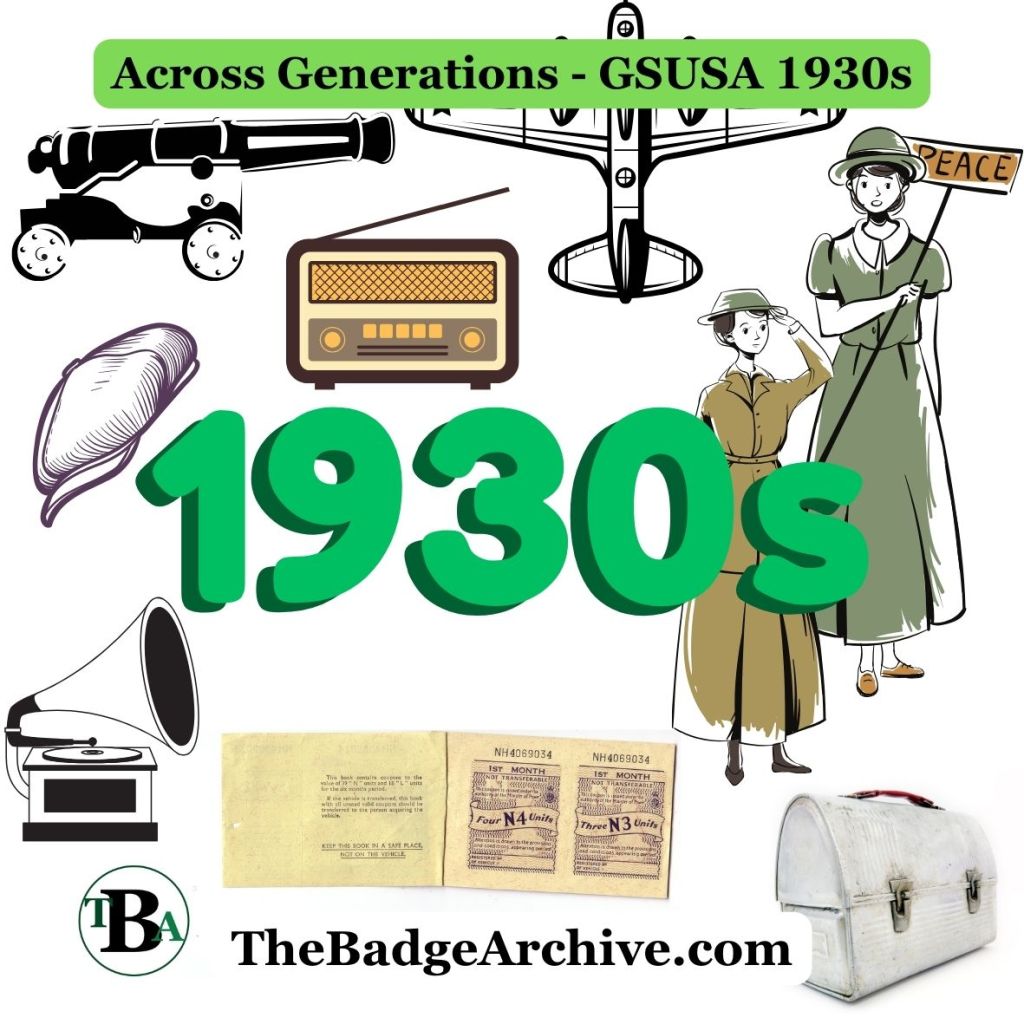
Girls wore khaki uniforms with military-inspired brass buttons, camped in canvas shelters, and earned badges in areas like Morse code, cooking over vagabond stoves, and nature cataloging. Despite economic hardship, Girl Scouting offered connection, joy, and purpose. They laid the groundwork for wartime service in the decade to follow.
What’s Different
What Was Different from Earlier Decades
- Handbooks reflected economic realities: Badgework emphasized thrift, home service, and preparedness.
- Camping grew as an affordable escape: Girls cooked simple meals over vagabond stoves, camped in shelters, and journaled nature discoveries.
- Conservation and cataloging became central: Many troops documented plants, birds, and insects as part of community science.
- Uniforms carried a strong sense of pride: Khaki dresses with brass buttons mirrored public service attire.
- Golden Eaglet was the top achievement: This award required high standards in leadership, service, and outdoor skills.
What’s Different from Today’s Girl Scouts
- No Daisy level: Brownies were the youngest members at the time.
- Badgework was regimented and handwritten: Girls tracked progress in paper books and presented completed steps for approval.
- Meetings were structured and adult-led: Opening ceremonies and scripted lessons were common.
- Bridging ceremonies didn’t formally exist: The concept of “Fly-Up” began to appear later, in the 1940s.
- No online tools or digital handbooks: Everything was physical—from badge guides to journals.
What’s the Same
- Singing, hiking, and the joy of campfires
- Sisterhood and life-long friendships
- A focus on self-reliance, leadership, and service
- Trefoil pride and badge earning
Featured Profiles
Marilyn’s Mother
In the early 1930s, Marilyn’s mother was a Mariner Scout in Florida. Her troop cataloged native orchids throughout the Everglades, marking one of the early examples of scout-led conservation. She earned her Morse code badge, which led to wartime service as a radio operator during WWII, where she met Marilyn’s father.
Read Marilyn’s Mother’s Full Profile →
Memory Snapshots
Coming Soon
Verified quotes from Girl Scouts active in the 1930s will appear here as memories are collected and confirmed.
🔗 Suggested Resources
- 1930 Handbooks – Digitized versions of the original handbooks used in this decade.
- 1930 – Girl Scout Handbook (Not available online – Images on Google)
- 1933 – Girl Scout Handbook
- 1933 – Girl Scout Proficiency Badge Requirements and Special Awards 1934 (Not available online – Images on Google)
- 1938 – Girl Scout Program and Activities, Ranks and Badges (Not available online – Images on Google)
- 1930s The Girl Scout Leader Newsletter Archive – Features stories of resilience, outdoor adventure, and service during the Great Depression.
Have a photo from the 1930s?
We’d love to feature vintage snapshots! Submit your troop pics or camp memories here.
Browse More or Submit Yours
Looking for another decade? Back to the Across Generations Page →
Got a memory to share? Submit a 1930s story →
–
For More Fun Ideas and Plans
for Daisy, Brownie, and Junior Scouts
Join the Girl Scout Daisy, Brownie, and Junior Leader Help Facebook Group
(Not an official GSUSA Group)

This is a supportive Facebook community for Daisy, Brownie, and Junior Girl Scout leaders. Whether you’re seeking advice, fresh ideas, or meeting plans, you’re in the right place! Let’s inspire each other, share our experiences, and make every troop meeting a memorable adventure.
for Cadette, Senior, and Ambassador Scouts
Join the Girl Scout Cadette, Senior, and Ambassador Leader Help Facebook Group
(Not an official GSUSA Group)
This is a supportive community for Cadette, Senior, and Ambassador Girl Scout leaders. This group offers solutions to keep older scouts engaged in scouting amidst their busy lives. Share strategies, tackle challenges, and exchange ideas for fun, meaningful activities that resonate with teens and build lasting connections.
Find out how you can support The Badge Archive!
–
- Return to the Daisy Badge List.
- Return to the Brownie Badge List.
- Return to the Junior Badge List.
- Return to the Cadette Badge List.
- Return to the Senior Badge List.
- Return to the Ambassador Badge List.
- See Multi-Level Themes
–



 The Badge Archive