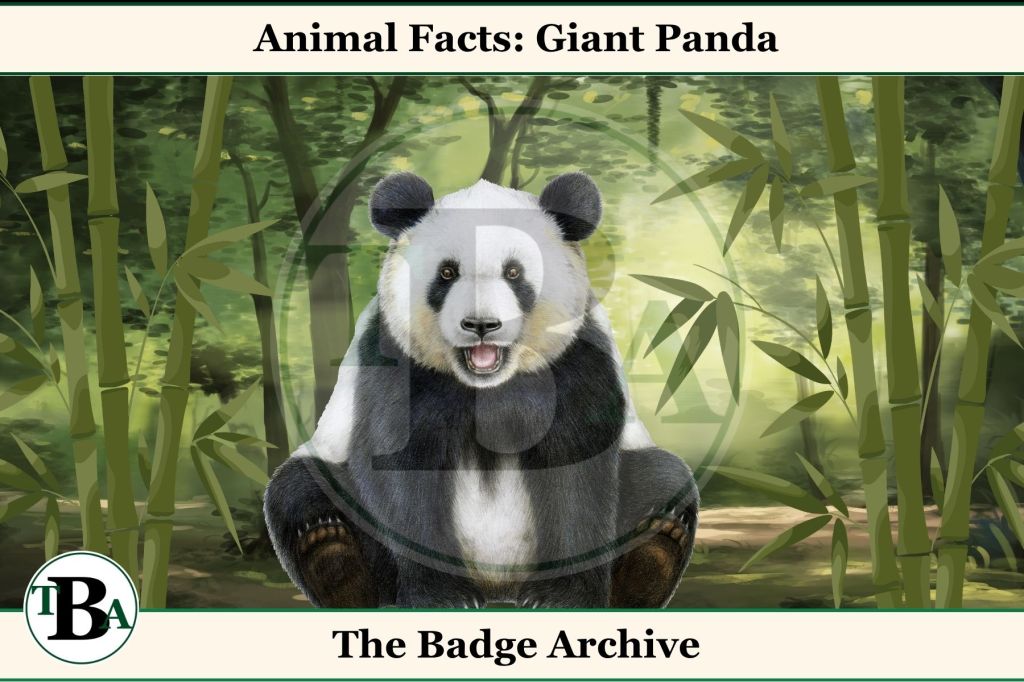
The Giant Panda (Ailuropoda melanoleuca) is a specialized mammal primarily located in the high-altitude mountain ranges of central China, specifically within the Sichuan, Shaanxi, and Gansu provinces. Although biologically classified within the bear family, the Giant Panda is a niche herbivore that has evolved to occupy cool, damp bamboo forests.
This species possesses several key physical adaptations, including a thick, woolly coat that repels moisture and flat, wide molars designed for grinding tough plant material. Its feeding behavior is highly specialized, requiring the animal to consume bamboo for 12 to 16 hours daily to meet its nutritional needs. A unique identifying feature is the “pseudo-thumb,” a modified wrist bone that acts as a sixth digit to help the panda grip and strip bamboo stems.
Basic Facts
- Common Name: Panda or Giant Panda
- Scientific Name: Ailuropoda melanoleuca
- Scientific Name Meaning: “Black and white cat-foot”
- Type of Animal: Mammal
- Habitat Range: Central China (Mountainous regions)
- Lifespan (Wild): 14 to 20 years
- Lifespan (Captivity): Up to 30 years
- Length (Size): 4.9 to 6.2 feet (1.5 to 1.9 meters)
- Weight: 165 to 330 pounds (75 to 150 kilograms)
Appearance
- Colors (Adult): Distinctive black and white coat; black fur covers the ears, eye patches, legs, and shoulders, while the rest of the body is white.
- Colors (Young): Newborns are pink, blind, and nearly hairless.
- Eyes/Vision: Possess vertical slits for pupils, similar to domestic cats, which provide excellent night vision.
- Mouth/Teeth: Powerful jaws and large, flat molar teeth used for mashing and grinding bamboo.
- Fur: Thick, oily, and woolly to protect against the cold and damp mountain climate.
- Skeletal Structure: Large, heavy skull with strong attachment points for jaw muscles; specialized wrist bone.
- Specialized Feet: Front paws feature five digits plus a “pseudo-thumb” (the radial sesamoid bone) used for handling food.
Diet
- Main Food Source: Bamboo (including stems, leaves, and shoots).
- Secondary Food Source: Grasses, bulbs, fruit, and occasionally small rodents or birds.
- Digestion Traits: A tough lining in the throat and esophagus protects the panda from bamboo splinters; a simplified digestive system requires high-volume consumption.
Habitat
- Proximity to Water: High-altitude forests with high rainfall and heavy mist.
- Nesting Locations: Females use hollow trees or rock crevices as dens for giving birth and nursing cubs.
- Environmental Preferences: Coniferous and broadleaf forests with a dense understory of bamboo at elevations between 5,000 and 11,000 feet.
Life Cycle
- Mating Habits: Generally solitary; mating occurs between March and May, with females fertile for only two to three days per year.
- Offspring Details: Usually one or two cubs are born, but typically only one survives in the wild.
- Gestation/Birth: 95 to 160 days; live birth.
- Milestones for Young: Cubs weigh only 3 to 5 ounces at birth (about the size of a stick of butter). They begin to crawl at 3 months, eat bamboo at 6 months, and leave their mothers after 1.5 to 2 years.
Fun Facts
- The panda’s “pseudo-thumb” is so effective that they can handle bamboo stems with the same precision as a human hand.
- Because bamboo has little nutrition, a Giant Panda must eat between 26 and 84 pounds of it every single day.
- Adult pandas are very solitary and use their sense of smell to make sure they don’t run into other pandas in the forest.
- A newborn panda cub is 1/900th the size of its mother—one of the smallest newborn-to-mother weight ratios of any mammal.
- Scientists believe the panda’s black and white colors help it hide in the shadows of the forest and blend in with snow in the winter.
- Despite their bulky size, pandas are excellent tree climbers and can even swim to escape danger.
–
For More Fun Ideas and Plans

Join the Girl Scout Daisy, Brownie, and Junior Leader Help Facebook Group
(Not an official GSUSA Group)

Join the Girl Scout Cadette, Senior, and Ambassador Leader Help Facebook Group
(Not an official GSUSA Group)

See other Recommended Facebook Groups for some Scouting Organizations
(No official Groups)
–
Click Here -> To see information References:
Disclaimer: The information published on The Badge Archive is built from the references listed below. These sources demonstrate that our content is grounded in facts and research, not opinion or speculation. Readers may consult them directly when looking for additional material.
- All about Wild Animals: Pandas. Milwaukee, WI, Gareth Stevens Publishing, 2004.
- Girl Scouts of the U.S.A. “Meeting : 5 Flowers, 4 Stories, 3 Cheers for Animals! Pt. 5” My.girlscouts.org, Girl Scouts of the U.S.A., https://my.girlscouts.org/content/girlscouts-vtk/en/vtk.html. Accessed 23 Jan. 2026.
- Gross, Ruth Belov. A Book about Pandas. U.S.A., Scholastic Inc, 1980.
- Takahama, Valerie, et al. How to Guide Girl Scout Daisies through 5 Flowers, 4 Stories, 3 Cheers for Animals. Girl Scouts of the U.S.A., 2010, p. 89.
–
- Find out how you can support The Badge Archive!
- Return to the Niche Mammals category.

 The Badge Archive
Leave a comment