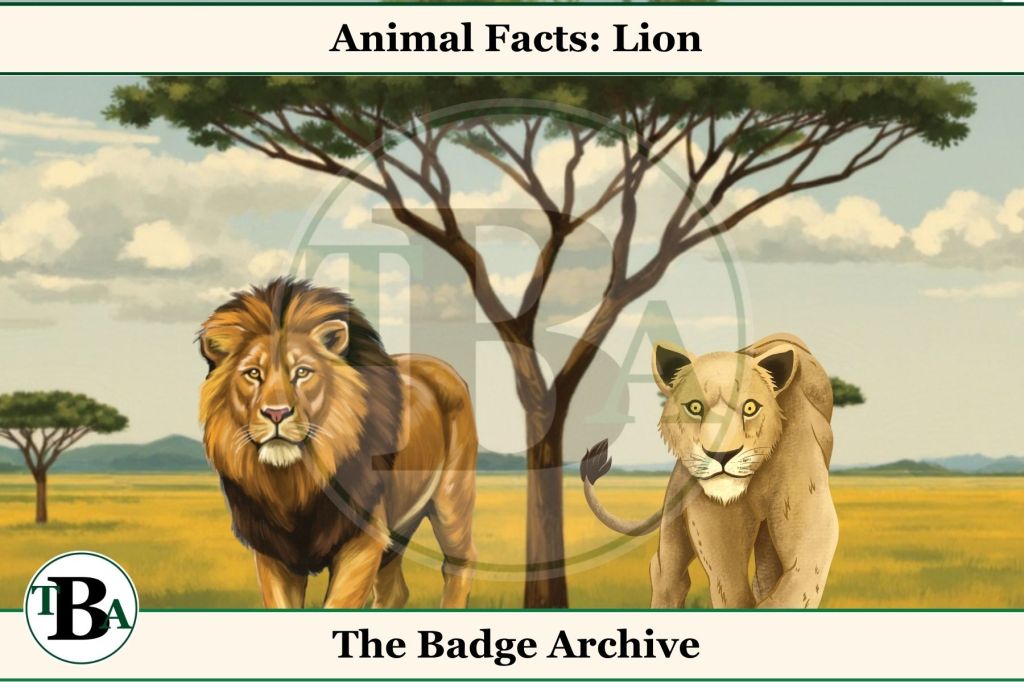
The Lion (Panthera leo) is a large mammal and carnivore primarily found across the African savannah and within the Gir Protected Area of northwest India. Classified as a top predator, these big cats are unique among felines for their highly social nature, living in cooperative family groups known as prides.
Lions possess powerful, muscular bodies equipped with sharp teeth, strong jaws, and hooked retractable claws designed to capture and hold large prey. As opportunistic hunters, they often work in organized group formations to surround and suffocate animals like wildebeests and zebras. A unique identifying feature is the long, thick mane grown only by males, which serves to protect them during territorial fights and indicates physical health to potential mates.
Basic Facts
- Common Name: Lion
- Scientific Name: Panthera leo
- Type of Animal: Mammal and Carnivore.
- Habitat Range: Grassy plains, open woodlands, and scrublands in Africa or teak forests in northwest India.
- Lifespan: In the wild, females live up to 17–18 years, while males typically live about 11–12 years. In captivity, they can live up to 25 years.
- Weight: Adult males weigh between 385 and 420 pounds (175–190 kg). Adult females weigh between 240 and 285 pounds (110–130 kg).
Appearance
- Colors: Adult coats range from pale tan to dark yellowish brown. Males have reddish-brown or black manes. Cubs are born with spots for camouflage that usually fade as they mature.
- Eyes/Vision: Lions have excellent eyesight and can see clearly in dim light and total darkness.
- Mouth/Teeth: They have long, pointed canine teeth for holding prey and specialized molar teeth in the back of the mouth for cutting meat.
- Fur: They have short fur that blends in with savannah grasses. Males are the only cats that grow a long, thick mane on the head, neck, and shoulders.
- Skeletal Structure: They have heavy, muscular frames built to handle prey significantly larger than themselves.
- Feet/Claws: Their sharp, hooked claws are retractable, meaning they are pushed out when needed for climbing or hunting but remain covered at other times.
Diet
- Main Food Source: Large grazing animals including wildebeests, zebras, buffalo, and antelopes.
- Secondary Prey: When large food is scarce, they eat rodents, hares, birds, reptiles, insects, and fruit.
- Scavenging Habits: Lions are known to chase away packs of hyenas to steal their kills.
- Storage/Digestion: They use rough tongues to clean meat off bones and have short, powerful jaws to clamp onto prey. A single male can eat up to 95 pounds (43 kg) of meat in one sitting.
Habitat
- Proximity to Water: Territories are established in areas that can support enough water and prey to feed the entire pride.
- Nesting Locations: Mother lions give birth and hide their helpless cubs in dens, such as caves or narrow openings between rocks.
- Preferred Environment: They settle primarily in grassy plains and woodlands but can survive in sandy deserts and rocky mountains.
Life Cycle
- Mating Habits: Dominant males mate with the mature females of the pride. A lioness is ready to breed after age two.
- Birth Details: Lions give birth to litters of two or three cubs, though litters can include up to six.
- Gestation: Females carry their cubs for approximately 14 weeks (nearly four months) before giving birth.
- Milestones: Cubs are born helpless and weigh less than 3 pounds. They begin walking at six weeks, join the pride at two months, and start eating meat at three months. They start learning to hunt at one year of age.
Fun Facts
- Known as the “King of the Beasts,” the lion has been a symbol of power and strength for thousands of years.
- A lion’s roar is so loud it can be heard from a distance of 5 miles (8 km).
- Lions are the only cats that live in large family groups, which are called “prides”.
- Lions rest for approximately 80 percent of the day, spending most of their time asleep or sitting in the shade.
- In Africa over 100 years ago, the construction of a major railway was stopped after two lions killed dozens of workers.
- Lionesses in a pride often give birth at the same time and will “babysit” by nursing cubs that are not their own.
–
For More Fun Ideas and Plans

Join the Girl Scout Daisy, Brownie, and Junior Leader Help Facebook Group
(Not an official GSUSA Group)

Join the Girl Scout Cadette, Senior, and Ambassador Leader Help Facebook Group
(Not an official GSUSA Group)

See other Recommended Facebook Groups for some Scouting Organizations
(No official Groups)
–
Click Here -> To see information References:
Disclaimer: The information published on The Badge Archive is built from the references listed below. These sources demonstrate that our content is grounded in facts and research, not opinion or speculation. Readers may consult them directly when looking for additional material.
- Barnes, Julia. 101 Facts about Lions. Milwaukee, Wi, G. Stevens, 2004.
- Kalman, Bobbie, and Amanda Bishop. The Life Cycle of a Lion. Crabtree Publishing Co, 2002.
–
- Find out how you can support The Badge Archive!
- Return to the Feline category.





 The Badge Archive
Leave a comment