There’s been a lot of conversation around AI‑generated art. Our team is full of artists: Scout K is a talented illustrator, Mr. John sketches constantly, and Ms. Tia has a graphic design background and loves creating nature scenes. So when AI image generation first appeared, we worried.
Early AI tools were trained on copyrighted artwork without permission, and they could mimic the styles of real artists, including small independent creators. That felt wrong. It was wrong. And we took that seriously.
But just like with Using A.I. for Writing, the ethics of AI depend on how the user chooses to use it.
What We Will (and Won’t) Use AI For
We do not use AI to recreate copyrighted artwork.
We do not ask it to mimic specific artists, studios, or franchises.
We do not accept images that resemble existing works too closely.
If we want a Van Gogh painting, we buy a print. If we want an anime‑inspired look, it must be original, not Studio Ghibli with the serial numbers filed off.
We can’t control how AI companies trained their models, but we can control our own standards. We treat AI the same way we treat any artistic tool. We must be responsible, respectful, and committed to originality.
Why Use AI at All?
Because The Badge Archive is a massive project built on a zero‑dollar budget.
Ms. Tia is doing the work of an entire creative and research team: meeting plans, activity breakdowns, timelines, badge comparisons, graphics, and more. Custom art takes days or weeks, and that time has to come from somewhere.
We always prefer original art:
- Scout K creates custom illustrations.
- Mr. John sketches pieces that Ms. Tia finishes in Adobe.
- We use purchased clip art whenever possible.
- We never feed Scout K’s art into AI, per her request.
- Mr. John enjoys experimenting with AI, but so far it hasn’t learned his style.
AI becomes a last‑resort tool when time is tight and no existing art fits the need.
The Reality: AI Art Isn’t Magic
If you’ve ever used AI image generators, you know the truth: They’re not very good.
Sure, sometimes they produce something surprisingly original. But most of the time?
- Extra fingers
- Twisted joints
- Strange shadows
- Random objects in the background
- Clothing that melts into the scenery
- Faces that look almost human… but not quite
- Text with spelling errors at best, garbled at worst
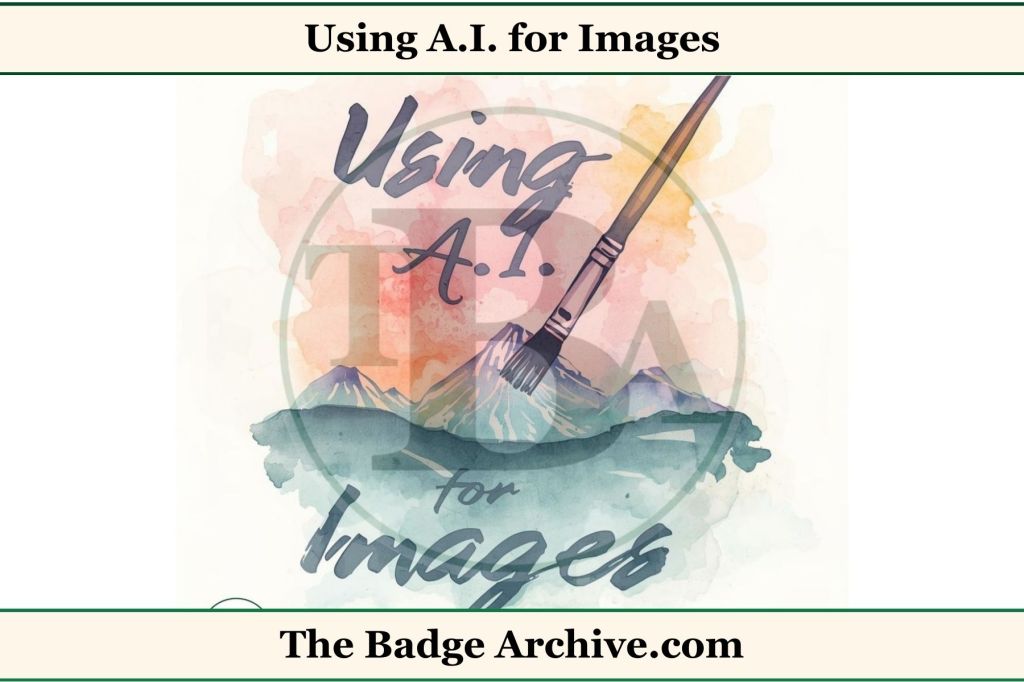
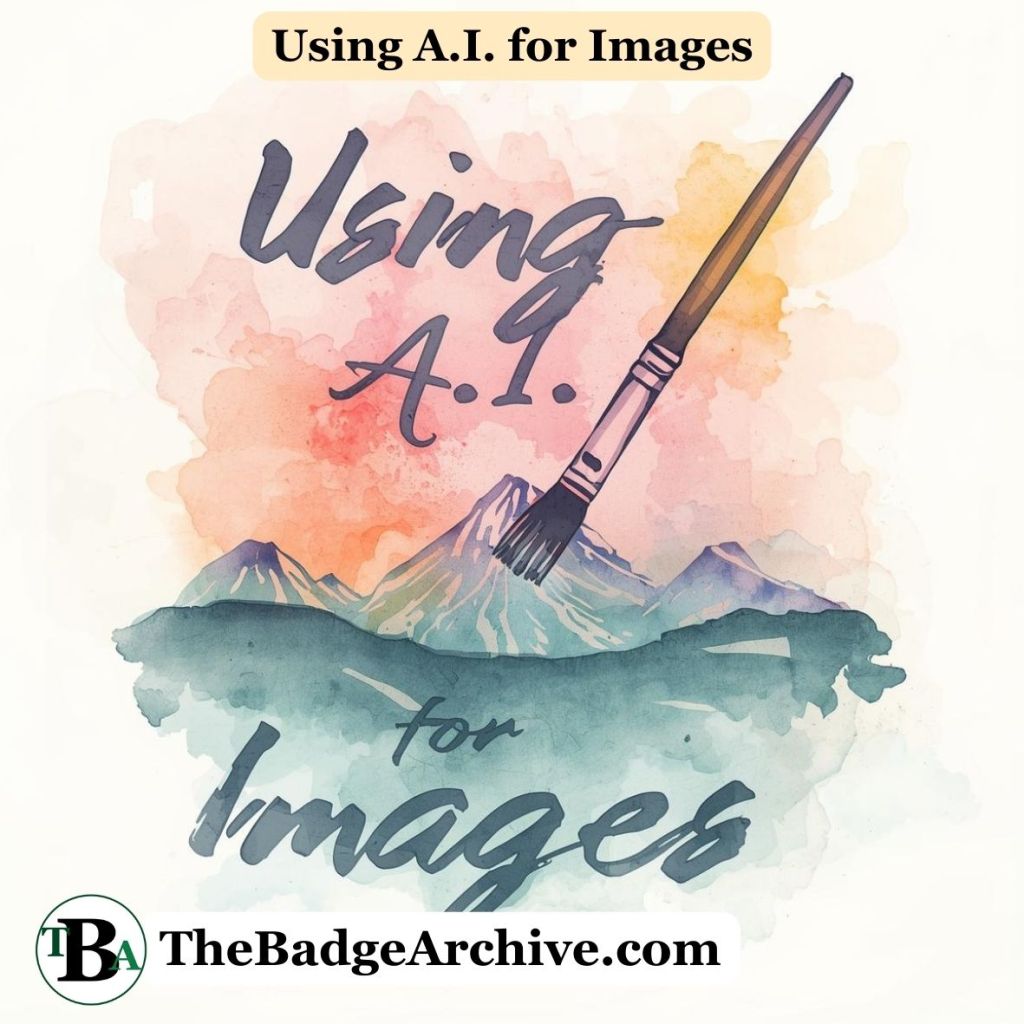
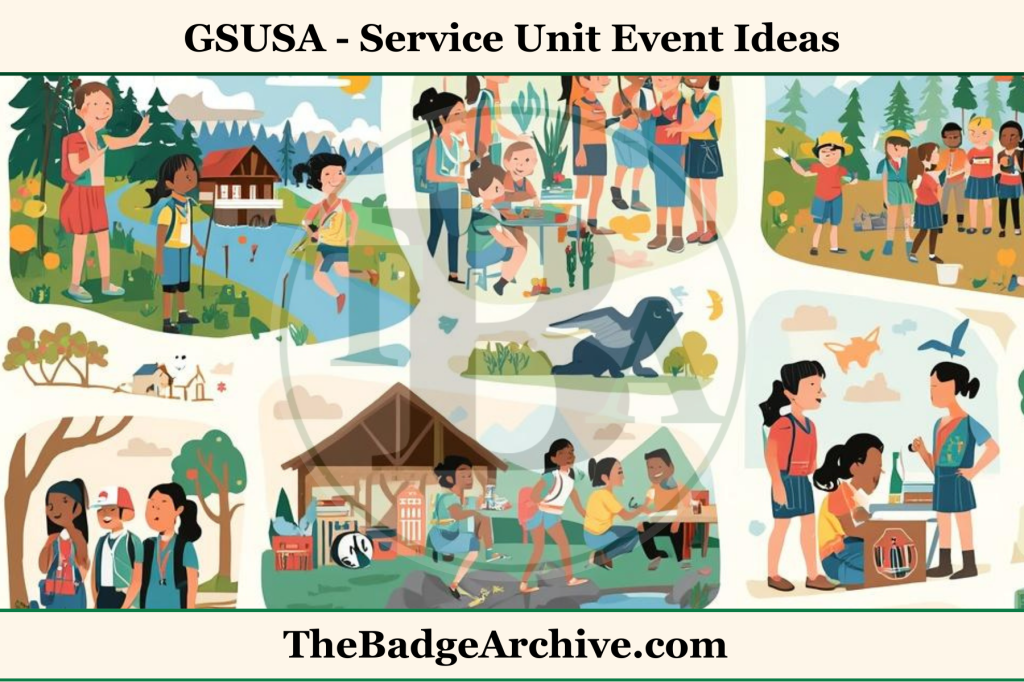
We even decided to have a little fun with the image for this article. The “Using AI for Images” logo was created by tossing a simple prompt into an AI generator just to show what an unedited result looks like. And yes, the text is spelled correctly this time, but the spacing is noticeably off.
We would never normally approve an image like this without removing the text and adding our own. The rolling hills in front of the mountains are a bit awkward, something on the left side feels unfinished, and the paintbrush isn’t quite our style. We’d probably swap it for a thinner, more precise brush instead of the wide flat one the AI chose. It’s a perfect example of why AI images are starting points, not finished products
And then there’s the other problem: Sometimes AI gives you something that already exists, or is so close that it might as well be a copy. We reject those immediately.
When the base image is usable, we still have to edit, correct, and rebuild it in Adobe or other tools. AI rarely gives us a finished product. One example? Mr. John once spent nine hours trying to get AI to correctly draw topography on a map he had already sketched. It never got it right. He eventually settled for a “good enough for now” version and fix the rest manually. It still saved a little time, but not much. If one correction by the A.I. doesn’t fix the issue, we never waste more time after that incident. Our manual fixes usually turn out better.
How We Use AI Responsibly
Every AI‑generated image goes through a strict process:
- Check for originality: If it resembles an existing artwork, we discard it.
- Check for accuracy: Anatomy, proportions, details? Everything gets reviewed.
- Edit and rebuild: We correct mistakes, redraw sections, and refine the final look.
- Respect artist boundaries: We never feed in art from creators who don’t want their work used that way. We never use generated art we can recognize as a copy.
This process is slow, but it matters. For example, when creating images for the Beauty Bios and global beauty standards, it took weeks to get unique, non‑derivative images. We used them privately with Cadettes first to ensure they were appropriate and original so these have not been posted online. But it was the first time Ms. Tia extensively used A.I. image creation as Mr. John did not have time to do any graphics during that project.
Transparency About Our Redbubble Art
If someone asks what’s actually behind the images we post or sell, we’re happy to be transparent about it. Some pieces, like the “Ask Me What’s Good” cookie, started with an AI base that we then rebuilt into something original. Others, like our Senses Octopus, began as purchased clip art that we heavily adapted to fit our needs. The “Purr-fect” cookie is altered Clip Art and original text. And then there are designs such as Connected for Cookies that are completely original. Only the circuit board background came from clip art.
We would use the term AI‑assisted more than AI-generated for these works. It simply means we used a generated starting point and then reshaped, corrected, and refined it into something uniquely ours.
About the Ferret Images
After our recent ferret release, questions came up, so here’s the truth:
- Some ferrets began as Mr. John’s sketches and were rendered through AI.
- Some came from AI prompts.
- All were edited, corrected, and finished by Ms. Tia.
We consider them original works, and they are copyrighted by The Badge Archive.
AI is not a replacement for artists. It’s not a shortcut to creativity. And it’s certainly not a way to bypass copyright.
For us, AI is a tool. It is one that helps a tiny team keep up with the enormous demand for scout resources. We use it carefully, ethically, and transparently. And we will always prioritize originality, respect for artists, and the integrity of our work.
If AI‑assisted images aren’t for you, we understand. But for those who rely on The Badge Archive, know that our commitment remains the same: to provide clear, accessible, and responsible resources that support leaders and empower scouts.
(Full disclosure: We used AI after writing this article to help figure out the flow of our message.)
For those with environmental concerns, please see the A.I. Water Consumption article.
–
For More Fun Ideas and Plans

Join the Girl Scout Daisy, Brownie, and Junior Leader Help Facebook Group
(Not an official GSUSA Group)

Join the Girl Scout Cadette, Senior, and Ambassador Leader Help Facebook Group
(Not an official GSUSA Group)

See other Recommended Facebook Groups for some Scouting Organizations
(No official Groups)
–
Click Here -> To see information References:
Disclaimer: The information published on The Badge Archive is built from the references listed below. These sources demonstrate that our content is grounded in facts and research, not opinion or speculation. Readers may consult them directly when looking for additional material.
- This article draws solely on the author’s firsthand experience and does not incorporate outside sources.
–
- Find out how you can support The Badge Archive!
 The Badge Archive
Leave a comment