If you read the GSUSA booklet, the Daisy Cybersecurity Basics badge is only learning some basic information.
Most troops can accomplish this in around 10 minutes.
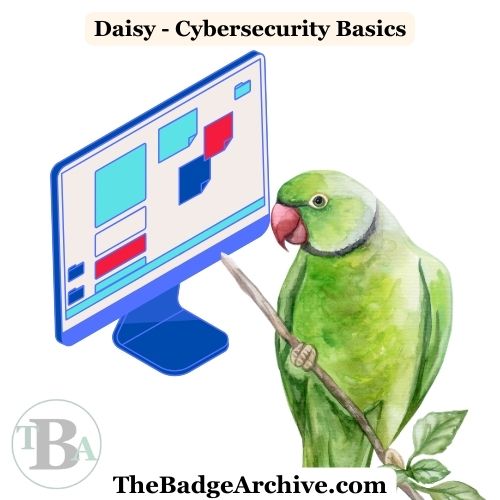
Bare Minimum to hit GSUSA Requirements:
- Read the following information.
Required Information:
Step 1: Computers are housed in a System Unit. That’s a computer case on a desktop or the laptop itself. Computers have a Monitor to view things. A keyboard and mouse allow the user to interact with the computer. Inside the computer are the parts that make them work. You can use Headphones or Speakers to hear what is on a computer. The printer is a device that connects with a computer to print things the computer tells it to.
Step 2: Protecting means keeping something safe from harm or danger. We have things, like safety rules, to keep ourselves safe from harm. Computers also have things to keep them from harm. Computers store and use information for us, the users. Other users might want use our information that we keep private, or harm our information. Virus and Malware are things that can make a computer hurt and not work properly. To protect computers, there are:
- Software, called Firewalls, can protect communication between devices.
- Anti-virus software to keep the device safe from viruses and malware.
- Guards or the user who can physically protect the device.
Step 3: A computer by itself cannot talk to other computers, search the internet, or download information. Computers are connected to each other through a computer network. The basic connections are made with wires. A wire can connect one computer to another, and all the communication and information goes through the wire.
Wireless connections are also common. Our voice travels through the air on sound waves we can’t see, but our ears can receive the sound, and we hear what someone else says. Information (or data) is sent through the air on specific waves we can’t see or hear, but a computer can have a receiver that “hears” or detects the information (or data). A wire connection needs a wire connected between computer 1 and computer 2 so they can send and receive data. A wireless connection needs a receiving device in both computer 1 and computer 2 so they can send and receive data.
Alternatives:
- The GSUSA VTK meeting plans spans two 60 minute meetings and dives in deeper to each topic to reinforce the basic information.
- A single 80-minute Basic Meeting Plan compiled by The Badge Archive is also available that gives a good mix between this bare minimum requirement and the two meeting VTK plan.
- Choose your own activities from the Daisy Cybersecurity Basics Activity List.
–
For More Fun Ideas and Plans
for Daisy, Brownie, and Junior Scouts
Join the Girl Scout Daisy, Brownie, and Junior Leader Help Facebook Group
(Not an official GSUSA Group)

This is a supportive Facebook community for Daisy, Brownie, and Junior Girl Scout leaders. Whether you’re seeking advice, fresh ideas, or meeting plans, you’re in the right place! Let’s inspire each other, share our experiences, and make every troop meeting a memorable adventure.
Find out how you can support The Badge Archive!
–
- Return to the Daisy Badge List.
–




 The Badge Archive